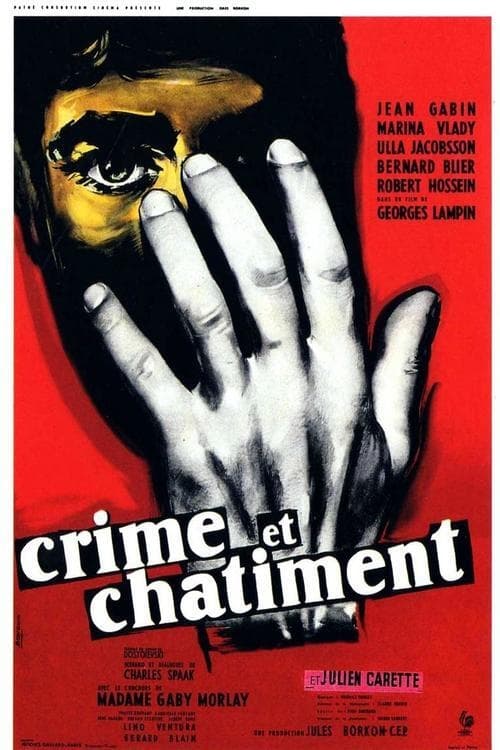
Crime and Punishment
1956
No user ratings available yet
Representation score: 2.8 out of 10
Representation Score
Limited
1923
Director
Robert Wiene
Runtime
142 minutes
Average Rating
No ratings yetNew Showbiz Analysis
Robert Wiene’s adaptation is a period-accurate psychological drama that adheres to the traditional social and religious hierarchies of 19th-century Russia. The narrative centers on the internal collapse of the male protagonist, emphasizing individual experience over diverse social representation. While the film provides a nuanced exploration of mental instability and the pressures of poverty, it lacks complexity in addressing multiple forms of identity. The story reinforces conventional norms rather than challenging them. Ultimately, the work serves as a study of individual transgression, staying true to the demographic and cultural context of its source material.
Category Breakdown
The film does not include any LGBTQ+ characters or explore non-straight relationships. The story focuses solely on the protagonist's conscience and his traditional romantic relationship with the female lead.
Female characters such as Sonya serve as moral anchors and conduits for spiritual redemption. While Sonya has emotional strength, she plays a supporting role rather than challenging patriarchal structures.
The cast is ethnically uniform, reflecting the historical context of Saint Petersburg. There is no indication of intentional casting diversity or the subversion of racial stereotypes.
The film examines socioeconomic hardship but upholds traditional religious morality. Redemption is portrayed as being achieved through faith and accepting suffering, rather than questioning religious institutions.
The film offers a deep portrayal of neurodivergence and mental health crises through Raskolnikov's mania and paranoia. However, these elements serve psychological horror rather than giving ability to act to a character with a condition.
Present on Screen
Limited or Absent
Official Synopsis
Former student Raskolnikov is pushed to murder when struggling to pay the rent on his apartment. When the murder is being investigated by the police, Raskolnikov struggles between trying to hide his guilt and the pressure to confess.
1956
1939
2002

1940
2002
1938
1935
1950
No reviews yet. Be the first to share your thoughts on this movie!
Use the rating form above to leave a star rating and optional review.