
Raya and Sakina
1982
No user ratings available yet
Diversity score: 5.9 out of 10

1965
Director
Youssef Chahine
Runtime
91 minutes
Average Rating
No ratings yetSynopsis
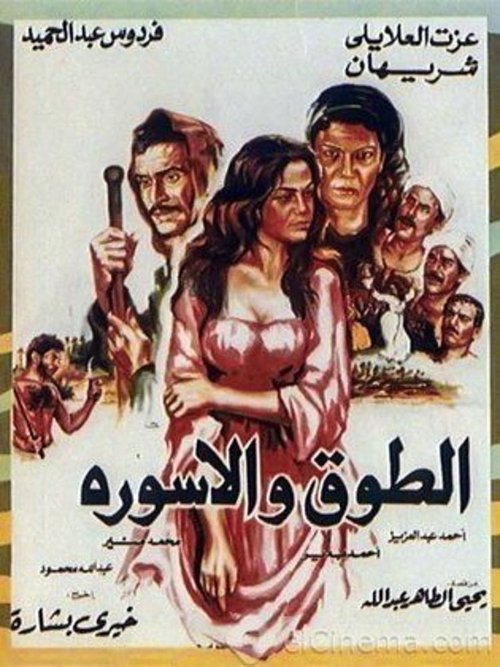
In a peaceful village, the mayor, seeing that the population is bored with tranquility, invents the mystical figure of Rajeh, and tells stories to villagers about the exploits of Rajeh, who kills and maims and steals. One day the mayor (Nasri Shamseddine) tells the villagers that Rajeh is heading to the village itself and they better be careful. Two smart men notice that the mayor was lying and that it is all his imagination. So they go on making good on the fictitious person and steal money and assault the mayor in the dark saying that they were Rajeh. Eventually, an old man with the name of Rajeh arrives in the village, amid public fears. Then it became obvious that Rajeh was merely a seller of rings for weddings and he wanted to marry his son to Rima, the mayor's niece. The two bad guys willingly go to jail for making use of the mayor's joke.
Overall Score
Good
Category Breakdown
LGBTQ+ Representation
The film lacks explicit depictions of LGBTQ+ identities. The narrative focuses on a traditional marriage arrangement between the ring seller’s son and the mayor's niece.
Gender Representation
The story centers on male figures of authority and those who disrupt them. Rima serves as a plot catalyst rather than a character with significant independent agency.
Racial & Ethnic Diversity
Set in an Egyptian village, the film offers a non-Western cultural landscape. It provides a departure from the Eurocentric perspectives common in global cinema of the era.
Religious & Cultural Diversity
The film critiques traditional institutions by portraying the mayor as a manipulator. It emphasizes the subjectivity of truth and the deconstruction of official narratives.
Disability Representation
There are no visible or invisible disabilities depicted as central to the character arcs or plot development.
Strengths
Areas for Improvement
AI Analysis
The Ring Seller succeeds in offering a localized, Middle Eastern perspective that challenges Western narrative hegemony. By centering an Egyptian village, it provides essential cultural variety. However, the film remains anchored in traditional social structures. The gender dynamics are largely driven by male conflict, and the female characters function primarily as plot devices. Ultimately, the film's strength lies in its social critique of authority rather than its breadth of identity representation.
1982

1977

1961
1986

1954

1951
No reviews yet. Be the first to share your thoughts on this movie!
Use the rating form above to leave a star rating and optional review.