You are here:

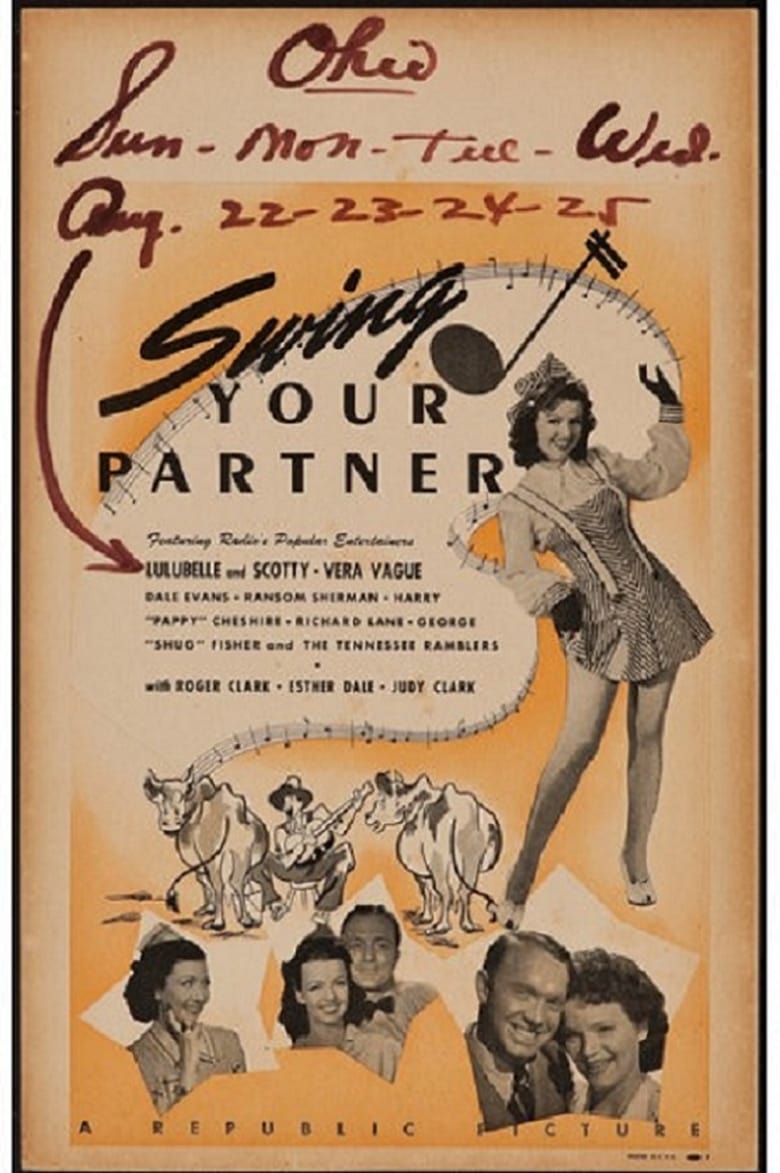
Swing Your Partner

Swing Your Partner

Representation Score

1.0/10

Minimal

1943

Approved

Director

Frank McDonald

Runtime

72 minutes

Average Rating

No ratings yet

New Showbiz Analysis

This musical comedy reflects the conventions of its time, prioritizing traditional narrative structures over progressive ones. It serves to reinforce rather than challenge the social and institutional hierarchies of the 1940s. The film engages minimally with diverse identities. While female characters exhibit some ability to act through workplace rebellion, the overall structure remains deeply conventional and adheres to the period's social norms.

Watch this, not that →

Category Breakdown

Does Swing Your Partner have LGBTQ+ representation?

Minimal

The film adheres to traditional assumptions where everyone is assumed to be straight and cisgender. It follows conventional romantic storylines and does not depict any same-sex relationships or non-binary gender identities.

How does Swing Your Partner portray gender?

Fair

Caroline Bird holds economic power, yet her leadership is portrayed through the 'grumpy old woman' stereotype. Female employees like Lulubelle and Scotty provide minor disruptions by challenging workplace hierarchies.

How racially and ethnically diverse is Swing Your Partner?

Minimal

The production reflects the homogeneous casting standards typical of 1940s musical comedies. There is no indication of significant racial or ethnic diversity within the cast.

How does Swing Your Partner represent religion and culture?

Limited

The story upholds traditional Western capitalist structures and employer-employee hierarchies. The narrative focuses on restoring social order rather than critiquing systemic factory conditions.

Does Swing Your Partner include disability representation?

Minimal

Characters are portrayed in typical able-bodied roles consistent with the musical comedy genre. There is no evidence of characters with disabilities being given meaningful roles.

Present on Screen

  • Female characters like Lulubelle and Scotty actively challenge workplace hierarchies through their radio broadcast prank.
  • The protagonist, Caroline Bird, holds a unique position of economic authority as a business owner.

Limited or Absent

  • The film relies on stereotypes that undermine female leadership by portraying the owner as grumpy and stingy.
  • The narrative lacks racial, ethnic, and LGBTQ+ diversity, reflecting the homogeneous standards of the 1940s.
  • The story prioritizes restoring the status quo over offering any critical examination of working conditions.

Official Synopsis

Caroline Bird, the crotchety and stingy owner of Bird Milk Products, is not amused when her employees at the Dairyville factory, the oldest plant in the company, broadcast a special radio program in honor of her birthday. Employees Lulubelle, Scotty and Vera Vague, fed up with the terrible working conditions at Dairyville, cut into the broadcast, and Lulubelle asserts that Caroline is a "big hunk of cheese." Lane, the factory manager, cannot find the culprit, and so Caroline goes with her secretary, Dale Evans, to Dairyville.

How are these scores produced? →

Where to Watch

Rate this Movie

No rating selected
Use arrow keys to select a rating from 1 to 5 stars
Optional text review, maximum 2000 characters
Tip: Wrap spoilers with ||double pipes|| to hide them
0/2000 characters
You must be signed in to submit a rating

Reviews

No reviews yet. Be the first to share your thoughts on this movie!

Use the rating form above to leave a star rating and optional review.