Operación Secretaria
1966
No user ratings available yet
Representation score: 1.4 out of 10
Representation Score
Minimal
1968
Director
Mariano Ozores Puchol
Runtime
93 minutes
Average Rating
No ratings yetNew Showbiz Analysis
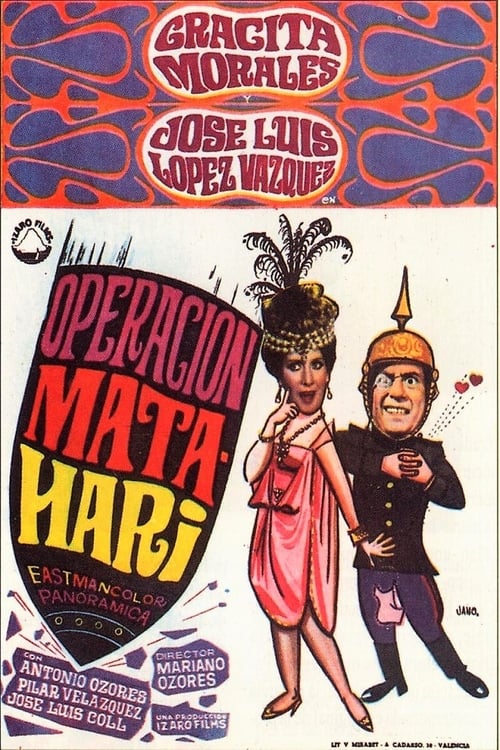
Operation Mata Hari is a period comedy that reimagines the historical exploits of the famous spy during World War I. As a product of 1968 Spain, the film is shaped by the social and censorship frameworks of the late Francoist era. The narrative prioritizes slapstick and traditional comedic structures over challenging established norms. It relies heavily on established historical clichés and functions as a genre-based diversion rather than a vehicle for exploring multiple aspects of identity. Ultimately, the film offers limited complexity, reflecting the era's reliance on conventional courtship and Eurocentric perspectives.
Category Breakdown
The film focuses on the Mata Hari legend, which revolves around espionage and romantic intrigue. There is no evidence of non-straight identities or critiques of the assumption that everyone is straight or cisgender.
The central spy figure plays a significant role in driving the story, but the comedy likely uses female characters as archetypes or foils. The narrative follows conventional gender hierarchies of the era.
The setting and casting reflect a Eurocentric focus typical of mid-century Mediterranean cinema. There is no indication of a diverse cast or non-Anglo-Saxon majority.
Produced in 1968 Spain, the film reflects traditional Western values regarding patriotism and social order.
There is no evidence regarding the inclusion of characters with visible or invisible disabilities in the available cast or plot information.
Present on Screen
Limited or Absent
1966
1985

1970
1991
1976

1974
1985
1973
No reviews yet. Be the first to share your thoughts on this movie!
Use the rating form above to leave a star rating and optional review.