
Money Not Enough 2
2008
No user ratings available yet
Diversity score: 5.4 out of 10

2002
PGDirector
Jack Neo
Runtime
105 minutes
Average Rating
No ratings yetSynopsis
Kok Pin, Boon Hock and Terry are classmates in "EM3" stream. In Singapore, that means that at the age of 12, the government has decided that they are not as academically inclined as their peers. Kok Pin is creative and a born artist but his parents would rather he focus on his Maths and Sciences. Boon Hock comes from a low-income family and needs to balance school and helping out at the food stall. Terry, a spoilt brat is just too lazy a student. While the three children suffer from the pressure of school, their parents have another set of problems - their jobs and careers.
Overall Score
Fair
Category Breakdown
LGBTQ+ Representation
The film lacks LGBTQ+ characters or explorations of non-heteronormative identities. The narrative focuses exclusively on familial and academic structures, maintaining a strictly heteronormative framework.
Gender Representation
Gender roles largely follow conventional expectations, particularly regarding domestic spheres. While mothers' emotional labor is highlighted, the film does not actively subvert traditional gendered power hierarchies.
Racial & Ethnic Diversity
The film excels by reflecting Singapore's multicultural landscape through a multi-ethnic cast. The classroom setting serves as a microcosm of a pluralistic society, integrating Chinese, Malay, and Indian identities.
Religious & Cultural Diversity
The story offers a sophisticated critique of hyper-competitive meritocracy and capitalist structures. It challenges singular definitions of intelligence by framing the rigid education system as an oppressive institution.
Disability Representation
The film avoids 'inspiration porn' by focusing on students who struggle with standardized cognitive assessments. It critiques systemic failures rather than treating neurodivergent-adjacent experiences as mere tropes.
Strengths
Areas for Improvement
AI Analysis
Jack Neo’s film is a potent social critique that finds its strength in systemic observation rather than individual identity politics. It successfully deconstructs the 'pressure cooker' environment of Singaporean education, framing the struggles of marginalized students as a valid rebellion against inflexible institutional frameworks. The narrative's primary achievement is its intersectional look at socioeconomic status and meritocracy. By centering students from diverse backgrounds, it highlights how institutional metrics often fail to account for individual creativity and varied cognitive profiles. However, the film remains conservative in its treatment of identity. It offers little disruption to heteronormative or traditional gendered structures, focusing instead on the broader societal tensions of class and academic achievement.
2008

2012

2013

2017

1998

2011

2015
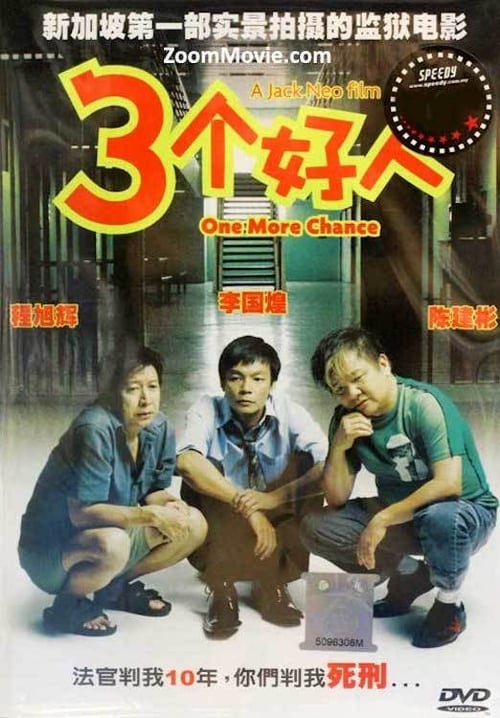
2005

2017

2014

2018

2013
No reviews yet. Be the first to share your thoughts on this movie!
Use the rating form above to leave a star rating and optional review.