
Extraordinary
2024
No user ratings available yet
Representation score: 6.3 out of 10
Representation Score
Fair
2010
Director
Luc Dionne
Runtime
101 minutes
Average Rating
No ratings yetNew Showbiz Analysis
The film serves as a traditional biographical drama that leans heavily on the 'great man' cliché. While it excels in portraying the internal, neurodivergent experience of a musical prodigy, it remains tethered to conventional Western structures. Its strengths lie in the psychological depth afforded to its protagonist. However, the narrative lacks breadth in terms of racial, gender, and LGBTQ+ diversity, reflecting the historical demographics of the classical music world.
Category Breakdown
The film does not include any explicit mention of LGBTQ+ characters or stories that go beyond the assumption that everyone is straight or cisgender. It follows conventional romantic storylines centered around the composer's life.
The story centers on a male protagonist, reinforcing traditional masculine stereotypes of the suffering artist. The focus remains on the male character's individual glory and control over the story.
The narrative focuses on Western classical music traditions within major Western cultural hubs. There is no indication of a non-Anglo-Saxon majority cast.
The film follows a standard biographical storyline within established global music institutions. It emphasizes individual struggle rather than a broader critique of Western culture.
The film provides a meaningful look at neurodivergence through the protagonist's internal musical experience. It portrays unique cognitive processing with significant control over the story.
Present on Screen
Limited or Absent
Official Synopsis
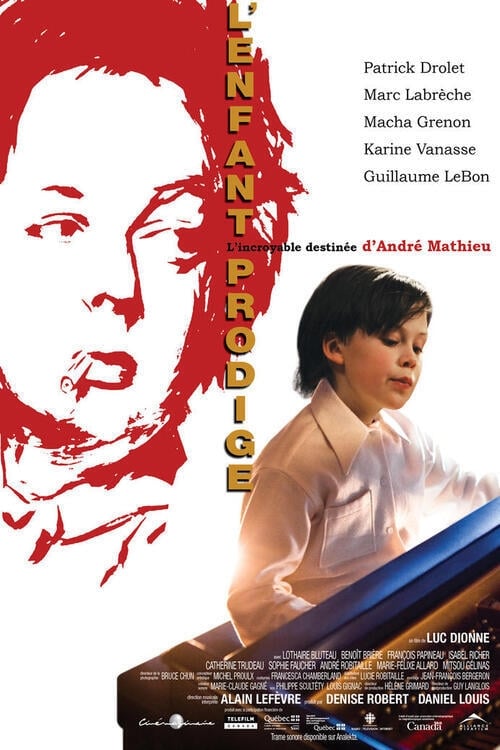
On the keyboard, the young hands fly rapidly and the melody rises. For the child, nothing is easier; he hears the sounds in his head. These hands belong to 6 years old André Mathieu. He won his audiences and fired up concerts halls in London, New York, Paris and around the world. Adulated, hailed, praised, the child prodigy seemed to have everything to succeed. From the top of his vertiginous successes, to depths of torment, the life of the "Little Canadian Mozart" blends into his music. A romantic and passionate composer wishing for happiness, his story is nevertheless played on tragic notes.
2024
1998
2009
2006

2006
2015
2008
1994
No reviews yet. Be the first to share your thoughts on this movie!
Use the rating form above to leave a star rating and optional review.