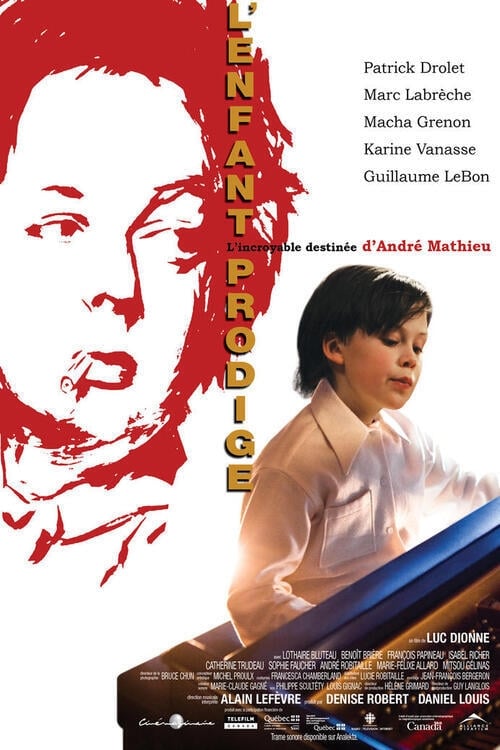
The Child Prodigy
2010
No user ratings available yet
Representation score: 5.8 out of 10

Representation Score
Good
2024
Director
Ilya Malanin
Runtime
100 minutes
Average Rating
No ratings yetNew Showbiz Analysis
Extraordinary is a character-driven drama that finds its strength in its nuanced portrayal of disability. By centering on Nikolai's musical talent and international competition, the film grants a character with physical limitations genuine ability to act and specialized skill. However, the film operates within a very traditional narrative framework. It relies on conventional familial roles and lacks exploration of queer identities or complex racial intersections, focusing instead on a humanist, universalist approach to storytelling. Ultimately, while the film does not seek to deconstruct social hierarchies, it succeeds in moving beyond the 'helplessness' clichés often associated with characters facing significant physical challenges.
Category Breakdown
The film does not explicitly depict LGBTQ+ identities or non-straight relationships. The emotional core focuses on traditional bonds between a mother and a male mentor.
Tatyana and Yuri play traditional roles, emphasizing maternal instincts and protective mentorship. The story follows a standard dramatic structure without challenging gender hierarchies.
A journey to China introduces international movement and cross-cultural settings. However, the focus remains on individual achievement rather than exploring complex racial intersections.
The narrative emphasizes humanist values like music's healing power and familial love. It adheres to conventional emotional storytelling without overtly secularist or anti-Western messaging.
Nikolai is given a significant role in driving the story despite his severe congenital illness. His disability serves as a catalyst for musical mastery rather than a source of pity.
Present on Screen
Limited or Absent
Official Synopsis
Eight-year-old Nikolai suffers from a congenital illness that leaves him unable to walk or speak. His doctors and even his own mother, Tatyana, have given up hope of treating his ailment. When Tatyana’s new friend Yuri tries using his own physiotherapy techniques to treat Nikolai, he discovers that Nikolai has a gift for music and teaches him to play the piano. With every note he learns and every melody he masters, Nikolai’s condition improves. He not only gains mobility, he also becomes an outstanding musician. Nikolai and Yuri travel to China together to take part in a piano competition, with a view to taking the grand prize. This is a humor-packed story about the healing power of music and fatherly love.
2010
2022

2016

2009

2025
2015

2018
1996
No reviews yet. Be the first to share your thoughts on this movie!
Use the rating form above to leave a star rating and optional review.