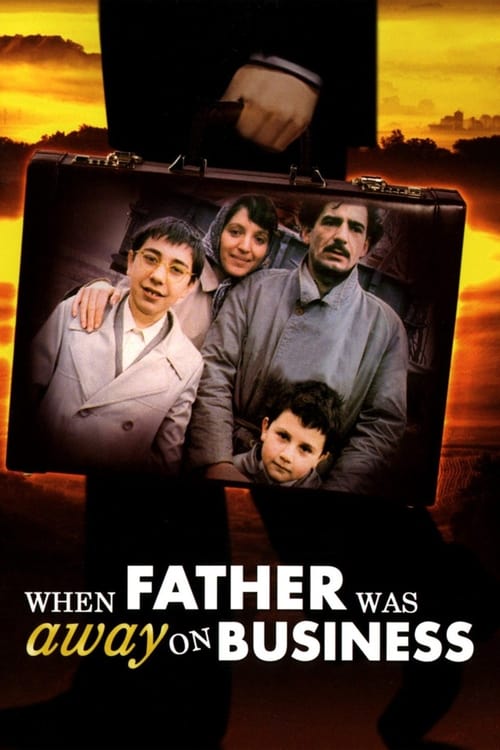
When Father Was Away on Business
1985
No user ratings available yet
Representation score: 5.8 out of 10
No Poster Available
Representation Score
Fair
1991
Director
Jan Schmidt
Runtime
90 minutes
Average Rating
No ratings yetNew Showbiz Analysis
Vracenky is a period drama that finds its strength in political and gendered subversion. By centering the conflict on a mother's transition from a committed communist to a dissident, the film challenges monolithic state narratives and traditional maternal roles. However, the film's impact is limited by a lack of diverse representation. The focus remains tightly on the socio-political landscape of 1950s Prague, resulting in a homogeneous demographic and a lack of visible LGBTQ+ or racial diversity. Ultimately, the film succeeds as a critique of institutional power but remains a narrow study of political identity rather than a broad exploration of diverse human experiences.
Category Breakdown
The film does not include any explicit LGBTQ+ characters or non-straight relationships. The plot revolves around a single mother and her son, highlighting their domestic and political challenges.
The story challenges traditional gender roles by centering on a female protagonist who has significant moral autonomy. Instead of being a passive figure, the mother becomes a catalyst for political change and systemic critique.
Set in 1950s Prague, the film focuses on local socio-political tensions. There is no indication of intentional racial diversity, as the narrative emphasizes class and political identity.
The film strongly critiques institutional dogma by portraying the Communist government as corrupt. It presents the state's judicial processes as tools used to oppress and marginalize individuals.
There is no mention of characters with physical or neurodivergent disabilities within the narrative.
Present on Screen
Limited or Absent
Official Synopsis
In the fifites the 10 year old boy Honza lives with his single mother in Prague. The mother is a dedicated communist in the beginning but she changes her mind when a show trial is held. She speaks about her dissatisfaction with the government and is immediately arrested. Honza is given to another family.
1985

1994
1995
1984
1982
1990

1971
2017
No reviews yet. Be the first to share your thoughts on this movie!
Use the rating form above to leave a star rating and optional review.