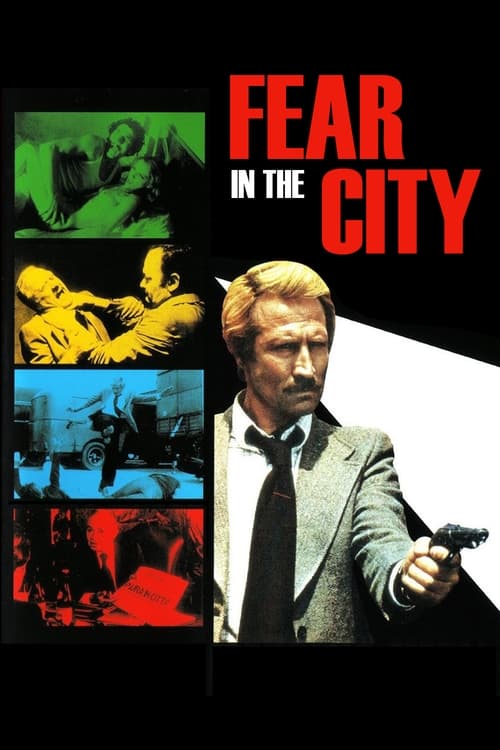
Fear in the City
1976
No user ratings available yet
Representation score: 3.6 out of 10
Representation Score
Minimal
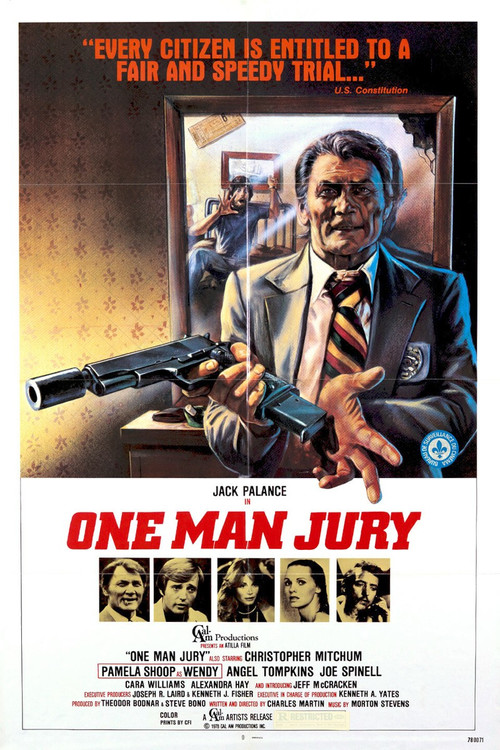
1978
RDirector
Charles Martin
Runtime
101 minutes
Average Rating
No ratings yetNew Showbiz Analysis
One Man Jury is a traditional 1970s crime thriller that emphasizes a single, masculine viewpoint on justice. The narrative structure centers on the psychological journey of a 'loose cannon' officer, reinforcing classic crime thriller themes without much social commentary. While the film challenges institutional norms by examining extrajudicial retribution, this exploration remains narrow. It focuses on the individual versus the state, missing the broader social or identity-based themes.
Category Breakdown
The film follows a traditional framework that assumes everyone is straight or cisgender. There are no LGBTQ+ characters or non-straight relationships portrayed.
The story focuses mainly on male violence and ability to act. Women play important roles but primarily as catalysts for the male protagonist rather than as independent agents.
The film sets its scene in a typical 1970s British urban environment. There is no significant racial or ethnic diversity among the main characters.
The story explores moral relativism and questions the effectiveness of Western legal systems. It highlights individualistic vigilantism rather than systemic issues.
There are no characters with visible or invisible disabilities in the film. Disability is not used as a plot device.
Present on Screen
Limited or Absent
Official Synopsis
Officer Jim Wade is a loose cannon on the force with a reputation for roughing up suspects, informants, witnesses, and just about everybody else who rubs him the wrong way. When women start being killed by a mysterious serial murderer called The Slasher, Wade vows to put a stop to the killing spree, regardless of whether through legal means or not.
1976
1983
1977
1988
1975
1983
1974
1973
No reviews yet. Be the first to share your thoughts on this movie!
Use the rating form above to leave a star rating and optional review.