
Scheherazade
1963
No user ratings available yet
Representation score: 1.4 out of 10
Representation Score
Fair
1953
ApprovedDirector
Albert Lewin
Runtime
82 minutes
Average Rating
No ratings yetNew Showbiz Analysis
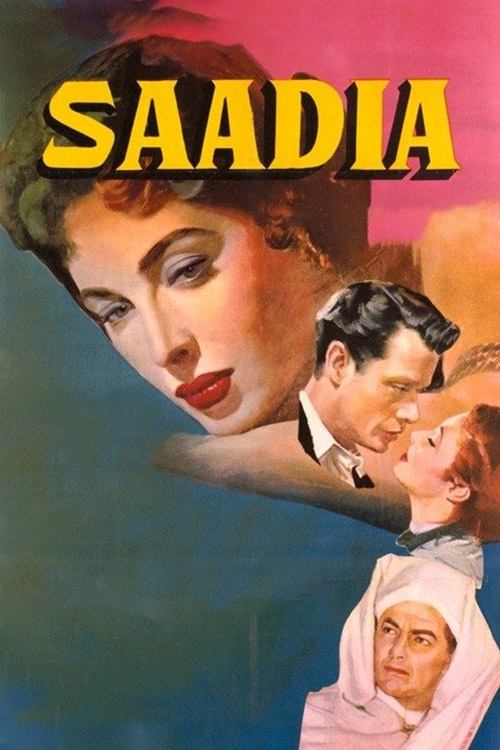
Saadia is a transitional mid-century film that avoids total Eurocentrism by centering a North African protagonist. The character of Saadia possesses notable ability to act, particularly in her brave journey to combat a plague. However, the film is heavily shaped by the colonial hierarchies of 1953. The narrative relies on Western medical and romantic frameworks to resolve the protagonist's conflicts, often positioning Western science as the solution to local superstition. Ultimately, while the film provides more cultural specificity than many of its contemporaries, it remains anchored in traditional clichés regarding female instability and colonial power dynamics.
Category Breakdown
The film lacks LGBTQ+ characters or non-straight relationships. The plot centers on a traditional romantic love triangle between the female lead and two men.
Saadia plays a significant role in driving the story through her heroic quest to retrieve plague serum. However, the film often frames female power through the lens of a dangerous, disruptive sorceress.
The Moroccan setting and Arab protagonist provide cultural specificity. However, the story is filtered through a colonial lens, positioning Western medical intervention as the primary catalyst for change.
The narrative relies on themes of mysticism and the 'evil eye.' It highlights a tension between indigenous belief systems and Western scientific authority.
The plot focuses on Saadia's psychological rehabilitation. This risks framing her mental state as a condition to be fixed by Western medical figures.
Present on Screen
Limited or Absent
Official Synopsis
Saadia is a wild, strange Arab girl whose life has been dominated by a local sorceress, a vengeful outcast in the community, who has convinced her she has the "evil eye" and brings disaster to all who love her. French doctor Henrik takes her to his clinic, for rehabilitation purposes, and falls in love with her as does his friend, Si Lahssen, the reigning prince of this small Moroccan state. When a plague falls on the town, Saadia is convinced she is responsible, and rides alone into the mountain country to retrieve the plague serum being held for ransom by bandits. The love triangle dominates most of the rest of the film.
1963

1959
1940
1959

1953

1931
1948

1951
No reviews yet. Be the first to share your thoughts on this movie!
Use the rating form above to leave a star rating and optional review.