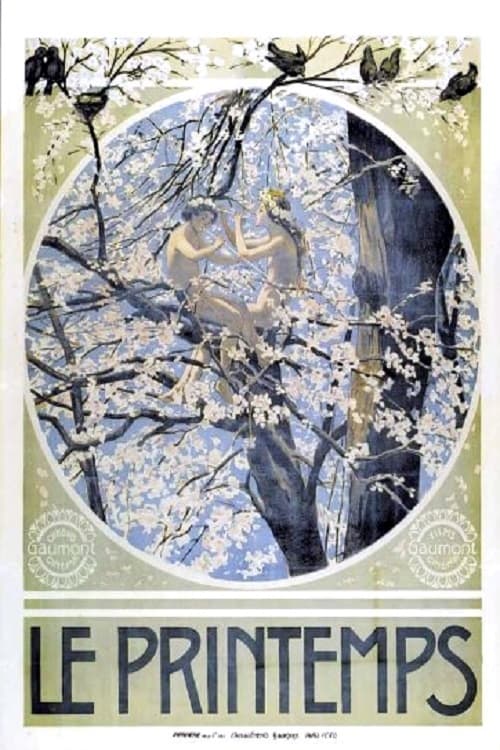
Spring: Episode 3 - The Becqué / In Orchards
1909
No user ratings available yet
Representation score: 4.0 out of 10
Representation Score
Limited
1935
ApprovedDirector
Tatiana Tuttle
Runtime
10 minutes
Average Rating
No ratings yetNew Showbiz Analysis
Spring Night is a brief, mythologically-driven ballet that explores the tension between social convention and the primal world. The story follows a woman who escapes a formal party to encounter the god Pan in a dream state. While the film offers a minor subversion of social decorum through the protagonist's escape, it lacks demographic breadth. The narrative remains deeply rooted in classical Western mythological clichés and traditional aesthetic exercises. Ultimately, the work functions as a specialized balletic piece rather than a diverse social commentary, focusing on archetypal themes rather than multi-layered complexity.
Category Breakdown
The film includes a solitary woman and a mythological male figure. There is no explicit mention of queer identities or non-conforming gender expressions.
The female protagonist takes control by sneaking away from a formal party. This move shifts her from a passive social role to the driver of a dreamscape.
The film adheres to a classical Western mythological framework. It does not include a diverse cast or challenge Anglo-centric casting traditions.
The story emphasizes Greco-Roman archetypes over modern social values. This focus aligns with traditional Eurocentric storytelling rather than diverse cultural perspectives.
The narrative does not feature any visible or invisible portrayals of characters with disabilities.
Present on Screen
Limited or Absent
Official Synopsis
A short ballet with a young woman who sneaks away from a party and finds a statue of the Roman god Pan. She falls asleep and dreams it comes to life and dances with her.
1909
1921
1909
1909
1948
1898
1917
1907
No reviews yet. Be the first to share your thoughts on this movie!
Use the rating form above to leave a star rating and optional review.