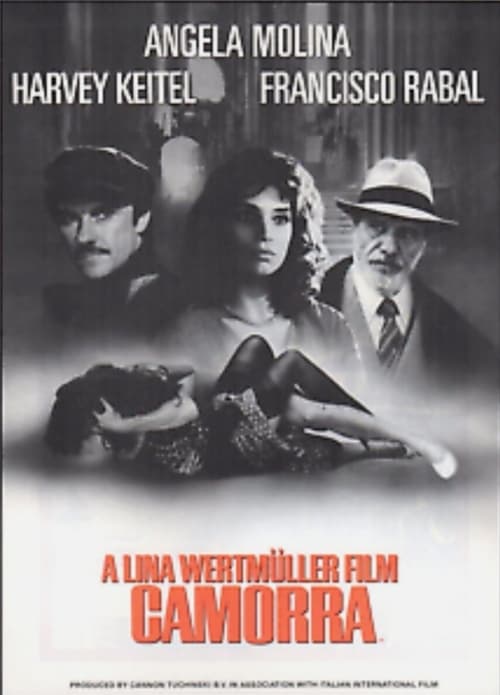
Camorra (A Story of Streets, Women and Crime)
1985
No user ratings available yet
Diversity score: 5.9 out of 10

1953
Director
Salah Abu Seif
Runtime
105 minutes
Average Rating
No ratings yetSynopsis
Dramatic rendition of a real life crime wave that terrorized the city of Alexandria, Egypt, between the years 1920 and 1922. Women are disappearing without a trace in what looked like the work of a serial killer. Being Egypt's first ever case of serial killings, the police is relentless and assigns the case to their best inspector. He traces the leads to sisters Raya and Sekina, but it becomes a race against time before they kill again.
Overall Score
Fair
Category Breakdown
LGBTQ+ Representation
The film focuses on a criminal underworld centered around female protagonists. There is no evidence of queer narratives or non-cisnormative identities within this historical context.
Gender Representation
The story disrupts traditional hierarchies by centering two women as the primary drivers of the plot. These protagonists exercise significant agency through their command of a criminal enterprise.
Racial & Ethnic Diversity
As a work of Egyptian Realism, the film provides an authentic portrayal of an Egyptian cast. It centers a non-Anglo-Saxon population within its primary dramatic framework.
Religious & Cultural Diversity
The narrative examines the friction between the urban underclass and social institutions. It presents the protagonists as products of a specific, often oppressive, socioeconomic environment.
Disability Representation
There is no significant evidence regarding the portrayal of physical or neurodivergent disabilities in this production.
Strengths
Areas for Improvement
AI Analysis
Salah Abu Seif’s direction utilizes Egyptian Realism to move away from escapist tropes, focusing instead on the lived experiences of the marginalized. By centering the narrative on a female-led criminal gang, the film subverts traditional gendered domesticity and male-led authority. The film excels at providing a culturally authentic setting that avoids Western-centric norms. It uses a lens of moral relativism to explore how socioeconomic pressures drive the protagonists' descent into crime, challenging singular institutional morality. However, the film lacks representation for LGBTQ+ identities and does not provide visible narratives regarding disability. While it is a sophisticated study of class and gender agency, these specific demographic areas remain unaddressed.
1985

2005
1950
1954
1962
1943
1936

1944
1950
2000

2003

2022
No reviews yet. Be the first to share your thoughts on this movie!
Use the rating form above to leave a star rating and optional review.