
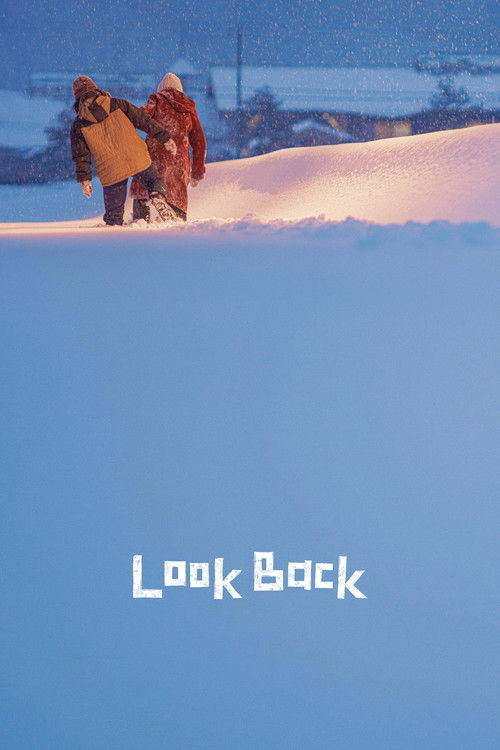
Look Back
2024
No user ratings available yet
Representation score: 7.5 out of 10
Representation Score
Fair
2026
Director
Hirokazu Kore-eda
Runtime
100 minutes
Average Rating
No ratings yetNew Showbiz Analysis
The film opens on the stark, high-contrast line art of a manga panel, immediately establishing the page as the only space where truth exists. Hirokazu Kore-eda’s adaptation of Tatsuki Fujimoto’s one-shot trades the source’s brutal finality for a gentler, more intimate gaze, yet the core argument remains: artistic creation is the only currency that outlasts the body. Fujino and Kyomoto are not defined by their relationships to men, their families, or their social standing; they are defined by the scratch of the pen. The camera lingers on their hands, treating the act of drawing as a sacred ritual that transcends the mundane tragedies of their lives. The sold meaning is one of meritocratic purity: talent and dedication are the sole measures of a life well-lived. The film critiques the commercialization of manga but ultimately celebrates the intrinsic value of the work, positioning the artists as autonomous subjects who refuse to be reduced to their social contexts. This is a liberal inversion of traditional gender roles, where women are not prizes or helpers but the architects of their own legacy. The male characters are hollow, serving only to highlight the girls’ independence, while the true romance is between the artist and the blank page. The ending settles on the completed volume, a physical object that survives the volatility of its creators. This is a moral verdict that values legacy over life, suggesting that the work is the only thing that truly matters. It is a quiet, sincere affirmation of artistic integrity, free from the noise of social expectation. The film does not preach; it simply shows two women making something that lasts. In a world that often demands women be relational or domestic, this film argues that they can be purely creative, and that this is enough.
Category Breakdown
The narrative centers on a deep, platonic female friendship defined by artistic collaboration. No romantic or sexual intimacy is depicted between Fujino and Kyomoto, nor are any other same-sex relationships shown.
Two women serve as the sole competence and moral centers, driving the plot through their artistic merit rather than romantic attachment. Male characters like Maeda and Nishi remain peripheral background figures who never challenge the girls’ creative authority or define their value.
The cast is entirely Japanese, reflecting the film’s specific national setting. No racial dynamics, ethnic tensions, or cross-cultural interactions are depicted or relevant to the story’s internal logic.
The film prioritizes individual artistic integrity and chosen creative partnership over traditional familial or societal expectations. The school and home environments function as backdrops rather than moral anchors, with the blank page serving as the ultimate site of meaning and legacy.
Kyomoto’s severe social anxiety is treated as a character trait that isolates her, but it is not framed as a medical condition or disability. There is no depiction of physical impairment, and the focus remains on psychological volatility rather than systemic accommodation or identity.
Present on Screen
Limited or Absent
Official Synopsis
Popular, outgoing Fujino is celebrated by her classmates for her funny comics in the class newspaper. One day, her teacher asks her to share the space with Kyomoto, a truant recluse whose beautiful artwork sparks a competitive fervor in Fujino. What starts as jealousy transforms when Fujino realizes their shared passion for drawing.
2024
2010
2022

2021
2023
2015
2015
2014
No reviews yet. Be the first to share your thoughts on this movie!
Use the rating form above to leave a star rating and optional review.