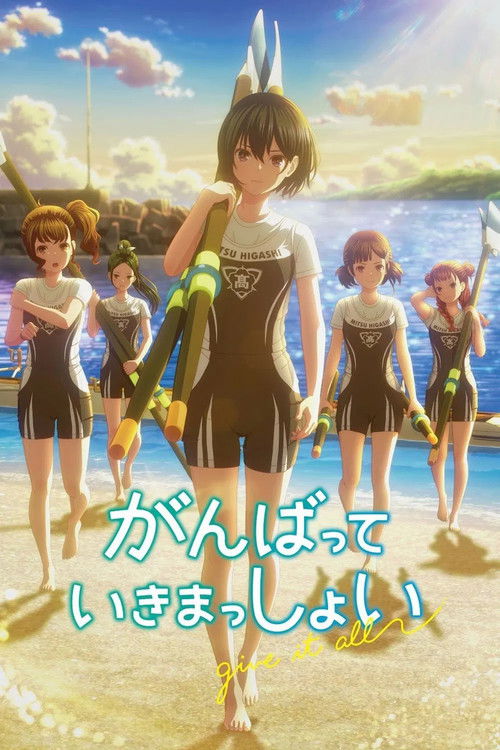
Give It All
2024
No user ratings available yet
Representation score: 4.6 out of 10

Representation Score
Good
2024
NRDirector
Kiyotaka Oshiyama
Runtime
58 minutes
Average Rating
No ratings yetNew Showbiz Analysis
Look Back is a sophisticated character study that excels in its portrayal of women's ability to drive the story. By centering the narrative on the competitive intellect and professional drive of its female protagonists, the film disrupts conventional gender hierarchies. The film's strength lies in its empathetic approach to neurodivergence and social non-conformity. Kyomoto’s withdrawal is presented as a functional response to her environment, providing a nuanced look at mental health and social isolation. However, the film remains culturally homogeneous and lacks explicit LGBTQ+ visibility. While the emotional intimacy between the leads is profound, the narrative stays within a localized Japanese context without broader multi-layered engagement.
Category Breakdown
The film explores a strong, emotionally resonant bond between two young women. While it avoids explicitly labeling their relationship, the intimate connection and shared isolation challenge traditional assumptions about friendship.
women's ability to drive the story and intellectual ambition drive the narrative. The protagonists are defined by their professional and artistic pursuits, successfully avoiding damsel-in-distress clichés and keeping masculinity in the background.
The cast is culturally homogeneous, reflecting a contemporary Japanese setting. The film focuses on local cultural grounding rather than engaging with broader racial or multi-layered themes.
The story prioritizes the individual artist's experience over religious institutions. It frames the creative process as a form of personal spirituality and critiques the isolation caused by meritocratic pressures.
Kyomoto’s reclusive behavior is treated with ability to act. The film offers a nuanced depiction of neurodivergence and social non-conformity, presenting her isolation as a functional response to her environment.
Present on Screen
Limited or Absent
Official Synopsis
Popular, outgoing Fujino is celebrated by her classmates for her funny comics in the class newspaper. One day, her teacher asks her to share the space with Kyomoto, a truant recluse whose beautiful artwork sparks a competitive fervor in Fujino. What starts as jealousy transforms when Fujino realizes their shared passion for drawing.
2024
2016
2014
2018

2015
2025

2010
2019
No reviews yet. Be the first to share your thoughts on this movie!
Use the rating form above to leave a star rating and optional review.