
Seisaku's Wife
1965
No user ratings available yet
Representation score: 5.7 out of 10
Representation Score
Good
2017
Director
Nobuhiko Obayashi
Runtime
169 minutes
Average Rating
No ratings yetNew Showbiz Analysis
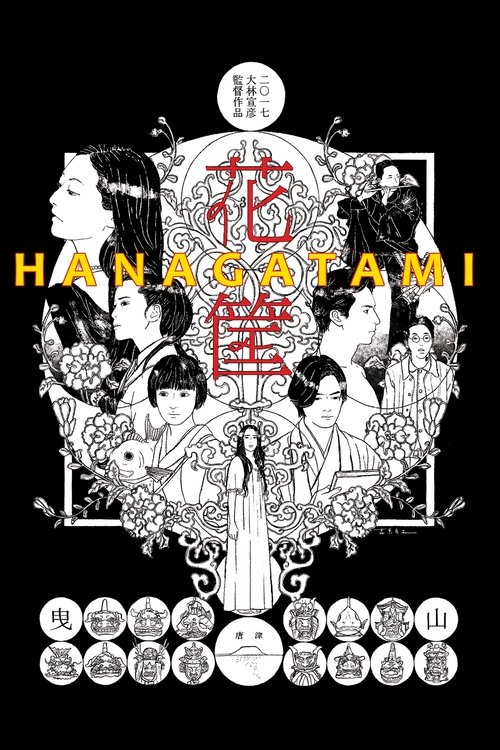
Hanagatami is an atmospheric exploration of memory and historical tragedy. It succeeds by using postmodern techniques to challenge state-sanctioned morality and traditional nationalistic duty. The film's strength lies in its refusal to offer a simple moral landscape, instead focusing on the subjective truths of a generation caught in war. However, the film lacks demographic breadth. It offers little in the way of LGBTQ+ representation or diverse ethnic perspectives, remaining tethered to the specific, homogeneous context of 1941 Japan. While historically authentic, this limits the scope of its social representation. Ultimately, the work prioritizes structural subversion over demographic variety. It deconstructs authority and gender roles through a surrealist lens, making it a significant piece of cinema despite its narrow social focus.
Category Breakdown
The film focuses on the shared experiences of youth during wartime but does not explicitly depict LGBTQ+ identities or non-straight relationships.
The narrative disrupts traditional hierarchies by centering the emotional interiority of both male and female characters. It emphasizes shared vulnerability rather than rigid wartime archetypes.
Set in 1941 Japan, the film maintains historical authenticity with a predominantly Japanese cast. It presents a homogeneous social landscape consistent with the era's constraints.
The film offers a sophisticated critique of state-driven nationalism and military authority. It uses dreamlike editing to highlight the moral ambiguity of the conflict.
An ailing cousin appears in the story, but disability is not a primary driver of character identity. The character serves mainly as an emotional catalyst.
Present on Screen
Limited or Absent
Official Synopsis
Spring, 1941: 16-year-old Toshihiko attends school in the coastal town of Karatsu, where his aunt cares for his ailing cousin. Immersed in the seaside's nature and culture, Toshihiko soon befriends the town's other extraordinary adolescents as they all contend with the war's gravitational pull.
1965

1957
1986

1959

1976

2013

1961

1965
No reviews yet. Be the first to share your thoughts on this movie!
Use the rating form above to leave a star rating and optional review.