The Talk of the Town
1942
No user ratings available yet
Representation score: 2.5 out of 10
Representation Score
Fair
1934
Director
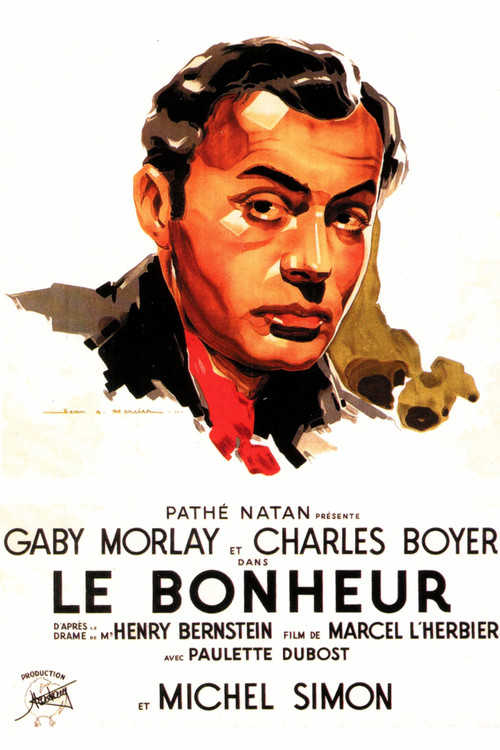
Marcel L'Herbier
Runtime
110 minutes
Average Rating
No ratings yetNew Showbiz Analysis
Le Bonheur distinguishes itself by centering its drama on political transgression rather than simple romance. By pairing an anarchist with a high-status actress, the film deconstructs traditional class hierarchies and explores the tension between individual ability to act and systemic control. The film succeeds in subverting gendered clichés, granting the female lead power within the legal and social spheres. However, the narrative remains limited by a lack of racial and LGBTQ+ visibility, reflecting the social homogeneity of its era. Ultimately, the film's strength lies in its ideological friction, using a criminal protagonist to challenge the sanctity of state-sanctioned order.
Category Breakdown
The film does not explicitly include LGBTQ+ identities. However, the strong attraction between an anarchist and a socialite hints at a departure from typical romantic norms.
Clara Stuart avoids the passive victim cliché by exercising significant social and legal influence. She actively intervenes in the judicial process, positioning herself as a powerful figure.
The narrative focuses on a homogeneous social stratum. There is no evidence of diverse casting or intentional racial blending within the story.
The film critiques state authority through its anarchist protagonist. This focus prioritizes individual rebellion and subjective morality over established legal and social systems.
There is no evidence regarding the depiction of physical or neurodivergent disabilities in the narrative.
Present on Screen
Limited or Absent
Official Synopsis
Philippe Lutcher, an anarchist, fires a shot at Clara Stuart, a famous stage and screen actress, but only wounds her. The star, through affectation and curiosity to know his motives, pleads in his favour at his trial, but he rebuffs her pity. After he has served 18 months in prison, they meet and fall in love.
1942
1938
1933

1952
1931
1939
1929
1940
No reviews yet. Be the first to share your thoughts on this movie!
Use the rating form above to leave a star rating and optional review.