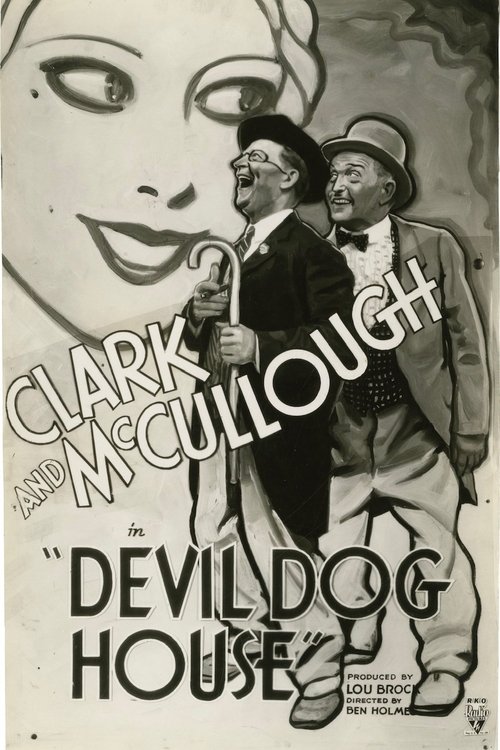
In the Devildog House
1934
No user ratings available yet
Diversity score: 2.1 out of 10

1935
ApprovedDirector
James Parrott
Runtime
15 minutes
Average Rating
No ratings yetSynopsis
Thelma and Patsy find themselves in a spooky house inhabited by a nut who is a mechanical genius and has made a robot who does everything. The inventor manipulates the robot's control board from a hidden room. The girls are soon in a panic. Patsy gets into an argument with the robot and loses the match of wits. Blackie Burke, an escaped convict, is using the house as a hideout, and this adds to the problems the girls already have.
Overall Score
Minimal
Category Breakdown
LGBTQ+ Representation
The film lacks any discernible presence of LGBTQ+ characters or non-cisnormative identities. The comedic structure relies on traditional slapstick dynamics without engaging with gender identity.
Gender Representation
The narrative centers on male protagonists and adheres to era-specific comedic tropes. While female characters appear, they react to external chaos rather than driving the plot through systemic subversion.
Racial & Ethnic Diversity
The cast appears homogeneous, reflecting standard 1930s casting practices. There is no evidence of race-bent casting or non-white majority ensembles within the production.
Religious & Cultural Diversity
The film operates within a conventional slapstick framework. It avoids critiques of Western institutions, capitalism, or religion, focusing instead on physical comedy and situational chaos.
Disability Representation
The mechanical automaton serves as a prop for physical comedy rather than a nuanced exploration of disability. Characters with disabilities do not possess agency within the narrative.
Strengths
Areas for Improvement
AI Analysis
The Tin Man is a product of its 1935 production era, prioritizing physical humor and situational comedy over social commentary. The narrative structure follows traditional tropes that do not challenge established social hierarchies or explore diverse identities. Representation is minimal across all categories. The film maintains a homogeneous demographic profile and relies on standard casting practices of the period. The central conflict involves an escaped convict and mechanical mishaps rather than intersectional themes. Ultimately, the film functions as a standard comedy of its time, lacking intentionality regarding the inclusion of marginalized groups or the subversion of traditional social norms.
1934
1917
1957
1933
1930

1935
No reviews yet. Be the first to share your thoughts on this movie!
Use the rating form above to leave a star rating and optional review.