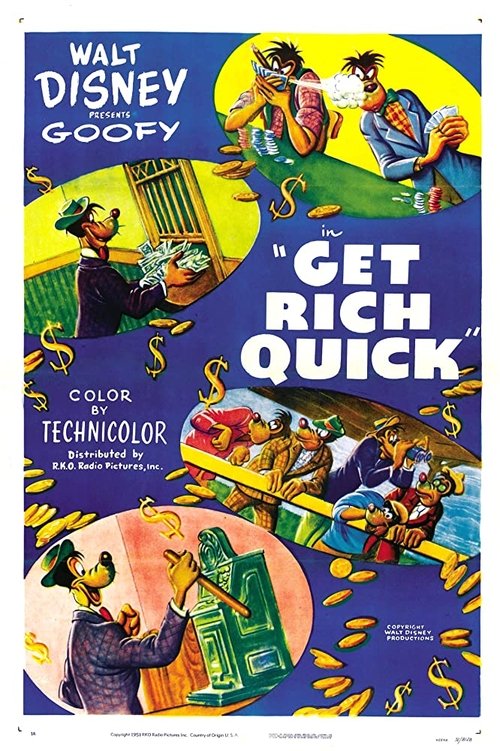
Get Rich Quick
1951
No user ratings available yet
Representation score: 1.1 out of 10
Representation Score
Minimal
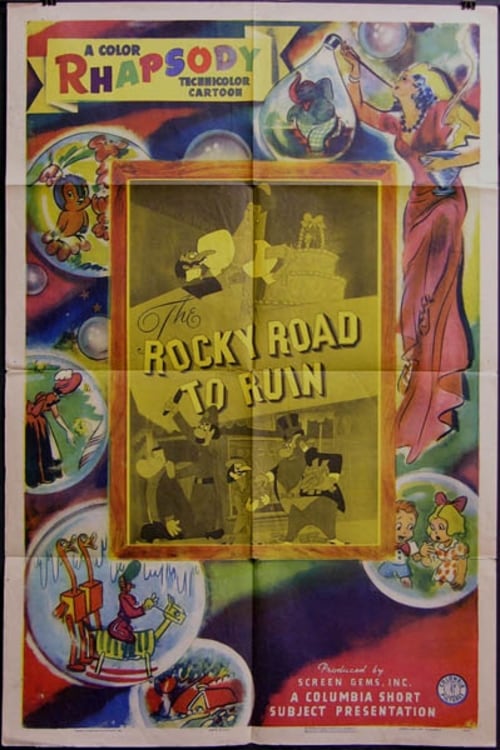
1943
ApprovedDirector
Paul Sommer
Runtime
8 minutes
Average Rating
No ratings yetNew Showbiz Analysis
The film operates as a traditional moralistic fable, using archetypal characters to uphold established social and ethical hierarchies. It relies on a predictable binary of virtue and vice to drive the plot. The narrative structure reinforces the status quo of the 1940s. It centers on conventional Western values regarding labor, marriage, and character, offering no complexity or disruption of traditional clichés. Ultimately, the work functions as a period-typical animation that prioritizes moral instruction through rigid, predictable character roles rather than diverse or nuanced social representation.
Category Breakdown
The film adheres to a strictly heterosexual and cisgender perspective. It focuses on traditional courtship and marriage, offering no representation of LGBTQ+ identities.
Gender roles are portrayed through rigid stereotypes. The heroine is shown as a fickle gold-digger, while the male protagonist is defined by his industriousness and moral purity.
The film lacks a multi-ethnic cast. Characters serve as moral allegories rather than diverse social representations, showing no effort to challenge Anglo-centric norms.
The story reinforces Western moral binaries and the sanctity of marriage. It promotes traditional values of perseverance and individual virtue without any cultural critique.
There is no evidence of characters with visible or invisible disabilities. Characters are defined by moral standing and socio-economic status rather than physical or neurodivergent traits.
Present on Screen
Limited or Absent
Official Synopsis
The hero, Handsome Harry, is poor, honest, hard-working and pure as the driven snow. The villain, first cousin to Sniveley Whiplash, is deceitful, mean, contrary, selfish and a down-right ornery cuss who would steal and hock his mother's false teeth. The pretty heroine is, at best, fickle and a front-running gold-digger but Harry is smitten with her and yearns for her hand in holy matrimony, but she opts to marry the villain and his money-bags. Years go by and Hero continues to study and work hard in the hopes his fair lady will become his. More years go by, and all concerned are aged with gray, and the heroine decides Handsome Harry is her man. The villain, takes up with young chorus girls for consolation.
1951
1935
1937
1936
1954
1940
1935
1936
No reviews yet. Be the first to share your thoughts on this movie!
Use the rating form above to leave a star rating and optional review.