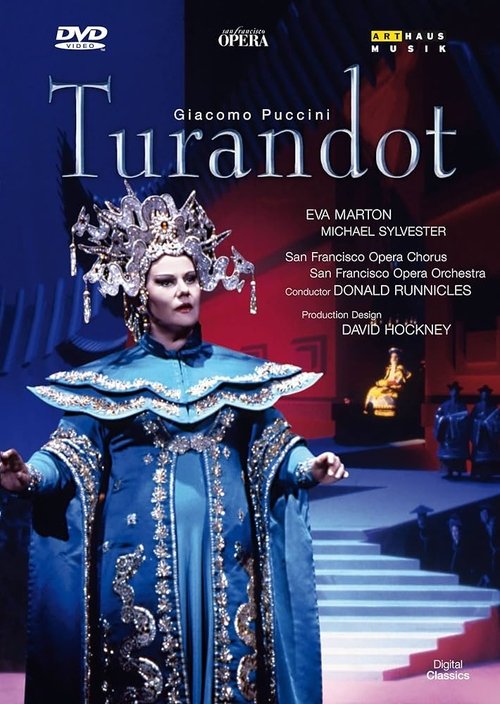
Puccini: Turandot (San Francisco Opera)
1994
No user ratings available yet
Representation score: 1.5 out of 10
Representation Score
Good
1999
TV-GDirector
Ruth Käch, Zhang Yimou, Hugo Käch
Runtime
129 minutes
Average Rating
No ratings yetNew Showbiz Analysis
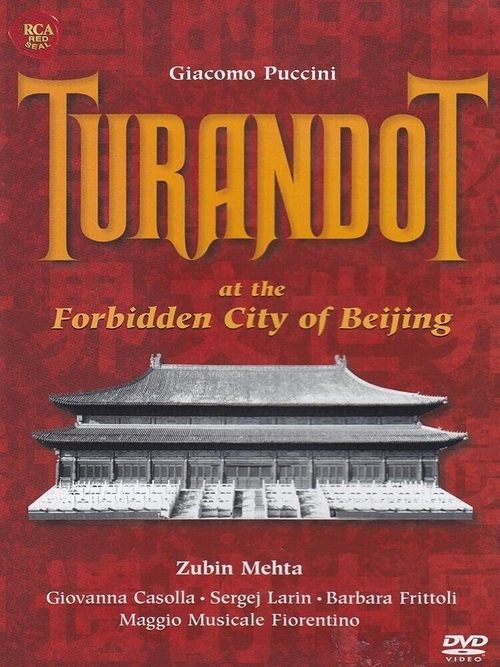
Zhang Yimou’s 1998 live staging of Puccini’s Turandot reclaims the opera’s Chinese roots by setting it in the Forbidden City. The production uses local architecture and martial arts to ground the story in its cultural origin, moving away from typical European interpretations. Gender dynamics are strong, with Turandot acting as a sovereign decision-maker who controls her own fate. She rejects marriage and commands the narrative, while male characters respond to her authority. This active role contrasts with passive female archetypes often seen in opera. However, the narrative remains traditional in other areas. There are no LGBTQ+ characters or relationships, and disability is entirely absent. The imperial hierarchy is only softened by personal emotion rather than systemic critique, leaving the power structure largely intact.
Category Breakdown
The production features no openly LGBTQ+ characters or same-sex romance. The narrative centers on a heterosexual courtship between Princess Turandot and Prince Calaf. All romantic and familial relationships depicted are strictly heterosexual and traditional.
Princess Turandot drives the plot as the central authority, wielding life-and-death power over her suitors. She actively rejects marriage and controls her own destiny, subverting passive female archetypes. Male characters, including Calaf and Timur, serve primarily as challengers or protectors responding to her commands.
The production stages a Western opera within the Forbidden City, featuring a predominantly Chinese cast and setting. This context re-centers the story in its cultural origin, contrasting with typical European stagings. The visual language integrates Chinese martial arts and aesthetics, grounding the narrative in local identity.
Imperial power is portrayed as rigid and absolute, with the Emperor’s word serving as law. The narrative questions this hierarchy through personal emotion, as Turandot’s eventual surrender to love undermines strict institutional control. Traditional Chinese court etiquette and ritualistic movements are emphasized as core cultural values.
No characters with physical or mental disabilities appear in the production. The story focuses on political intrigue, romantic conflict, and imperial hierarchy. Disability is not a plot point, character trait, or thematic element in this performance.
Present on Screen
Limited or Absent
Official Synopsis
Turandot at the Forbidden City is a 1998 live production of Puccini's opera Turandot directed by Zhang Yimou. The opera was performed by Giovanna Casolla, Audrey Stottler, and Sharon Sweet alternating as Princess Turandot; Kristján Jóhannsson, Sergej Larin and Lando Bartolini as Calàf; and Barbara Frittoli, Angela-Maria Blasi and Barbara Hendricks as Liù, with Zubin Mehta conducting the Maggio Musicale Fiorentino.
1994
1994
1994
1998
2017
2024
2015
2001
No reviews yet. Be the first to share your thoughts on this movie!
Use the rating form above to leave a star rating and optional review.