
The Manual of Love
2005
No user ratings available yet
Representation score: 4.0 out of 10
Representation Score
Limited
1969
Director
Tito Novaro, Jorge Fons, Manuel Michel
Runtime
91 minutes
Average Rating
No ratings yetNew Showbiz Analysis
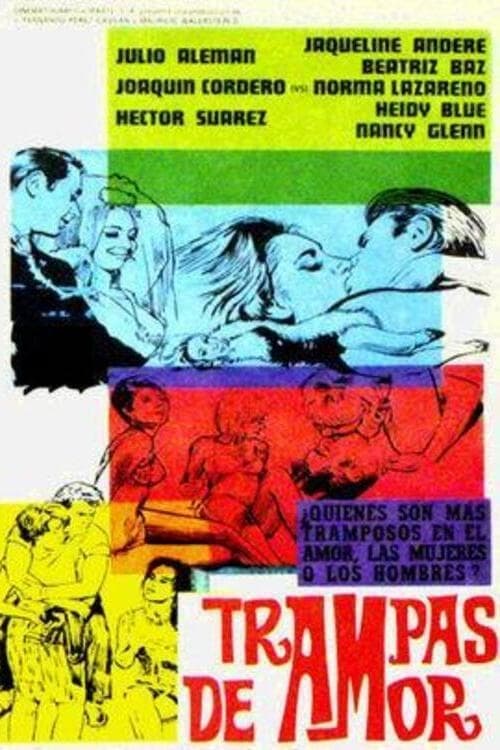
Love Traps functions as a typical genre piece, emphasizing interpersonal romantic drama over social critique. The film's structure aligns with the commercial expectations of 1969 Mexican cinema, focusing on themes of desire and infidelity. While the production offers a domestic Mexican cast, it lacks the multi-layered depth or intentional diversity needed to challenge systemic hierarchies. The narrative appears to reinforce traditional social and gendered structures rather than disrupting them.
Category Breakdown
The film does not include any characters with non-traditional gender identities or same-sex relationships. Its focus on infidelity reflects assumptions about straight relationships typical of 1969 Mexican commercial cinema.
Stories centered around romantic conflicts often follow traditional gender roles. The film likely adheres to conventional gender dynamics within its domestic drama setting.
The cast mainly features domestic actors, reflecting a non-Anglo-Saxon majority. However, the production does not blend diverse racial backgrounds intentionally or provide characters who reflect more than one aspect of diversity.
The story operates within the standard social norms of late-1960s Latin American melodrama. It reinforces traditional views on family and romantic morality rather than challenging institutions.
There are no characters with visible or invisible disabilities mentioned in the narrative.
Present on Screen
Limited or Absent
Official Synopsis
Love, infidelity and desire are the protagonists of three stories full of entanglements and romance.
2005

1950
1980
1962
1973

1995

1966
1974
No reviews yet. Be the first to share your thoughts on this movie!
Use the rating form above to leave a star rating and optional review.