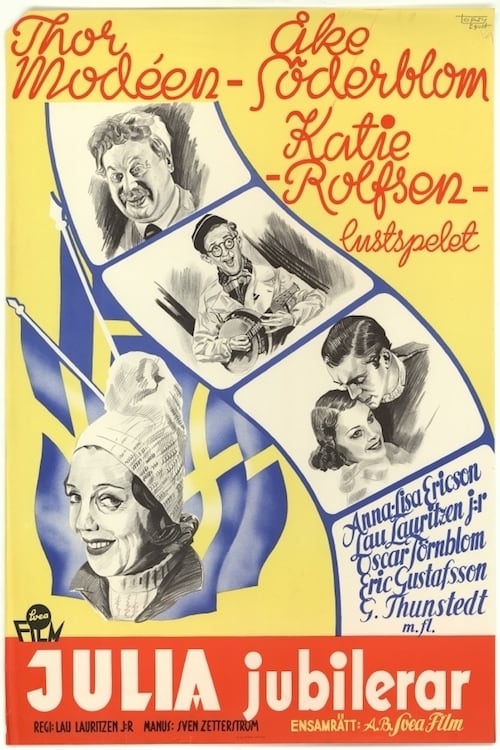
Fröken Julia jubilerar
1938
No user ratings available yet
Representation score: 1.9 out of 10
No Poster Available
Representation Score
Minimal
1937
K-16Director
Ragnar Arvedson
Runtime
80 minutes
Average Rating
No ratings yetNew Showbiz Analysis
En sjöman går iland is shaped by its specific historical and cultural context. The film relies on traditional comedic clichés, such as a quest-based plot and clear distinctions between heroes and villains. It operates within the social and demographic norms of 1930s Scandinavia, lacking the intention to disrupt social norms or provide layered representation. Instead, it focuses on a maritime-to-urban transition. Overall, the film reflects the homogeneous and straight-centered structures of early 20th-century European cinema, prioritizing a standard comedic exploration of mistaken identity and familial duties.
Category Breakdown
The film does not include any characters with non-straight or non-cisgender identities. The story revolves around a captain and his niece, following traditional family dynamics.
Gender roles adhere to a conventional structure typical of the 1930s, where the male captain leads the action, while the female character primarily receives information.
The film is set in Stockholm and maritime environments, reflecting the homogeneous society of 1930s Sweden without any multicultural elements.
The story emphasizes institutional integrity and legal consequences of embezzlement, upholding standard social order without challenging Western institutions or promoting radical ideas.
There are no characters with visible or invisible disabilities in the film. The narrative does not include neurodivergent representation.
Present on Screen
Limited or Absent
Official Synopsis
The sailor Axel Nord is asked by his captain to do him a favor before his leave begins. Captain Rundholm wants him to give a letter to his niece in Stockholm. As Nord discovers, it isn't easy to find somebody you never have met, and it isn't made easier by the fact that some crooks believe that the letter contains evidence proving embezzlement in the shipping company.
1938

1948

1946

1951

1957

1957
1949
1963
No reviews yet. Be the first to share your thoughts on this movie!
Use the rating form above to leave a star rating and optional review.