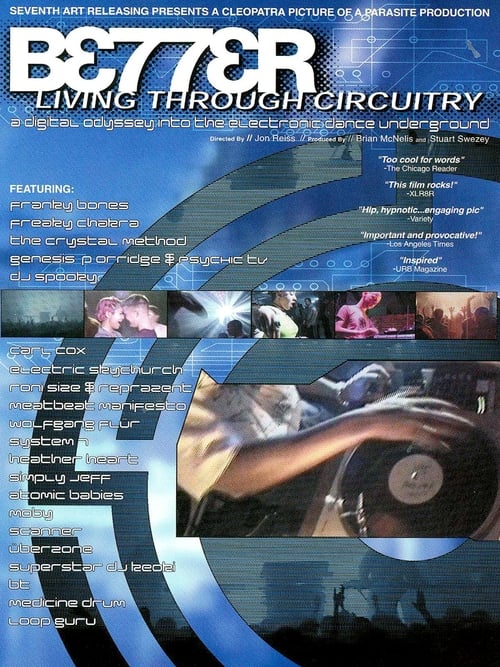
Better Living Through Circuitry
1999
No user ratings available yet
Representation score: 6.2 out of 10
Representation Score
Good
1998
Director
Iara Lee
Runtime
75 minutes
Average Rating
No ratings yetNew Showbiz Analysis
Modulations serves as a global ethnographic study that successfully challenges the Western-centric bias often found in music documentaries. By traveling from Europe to Japan, the film presents a polycentric view of electronic culture, granting a significant role in driving the story to non-Western innovators. The documentary's greatest strength is its ability to humanize technology. It reframes electronic music from a 'soulless' medium into a tool for individual expression, effectively deconstructing traditional notions of musical authority. However, the film's focus on technical philosophy and the 'human element' means that specific identities, such as LGBTQ+ or disability-related narratives, remain incidental or undocumented.
Category Breakdown
The film captures a subculture deeply connected with queer spaces and non-traditional social structures. While the inclusion is meaningful, it remains incidental rather than centered on explicit LGBTQ+ narratives.
The documentary disrupts traditional hierarchies by showcasing creators who operate outside masculine archetypes. It avoids reinforcing patriarchal structures of musical genius through its focus on technical mastery.
The film excels by refusing to center Western musical hegemony. By featuring innovators from Japan and the American Midwest, it treats global electronic movements as equal cultural contributors.
The narrative prioritizes technological evolution and the deconstruction of traditional artistic institutions. It frames electronic music as a legitimate disruption of established musical and capitalist hierarchies.
There is no specific evidence regarding the portrayal of neurodivergence or physical disabilities. The film focuses on philosophical human elements rather than documented disability arcs.
Present on Screen
Limited or Absent
Official Synopsis
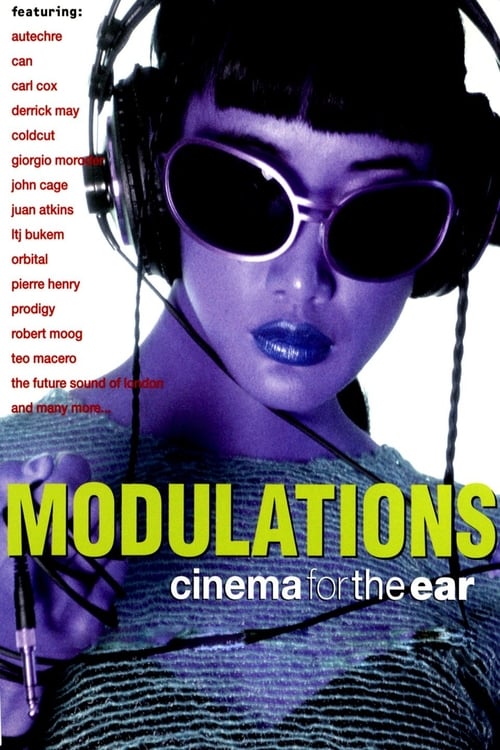
Less a documentary than a primer on all electronic music. Featuring interviews with nearly every major player past and present, as well as a few energetic live clips, Modulations delves into one of electronica's forgotten facets: the human element. Lee travels the globe from the American Midwest to Europe to Japan to try to express the appeal of music often dismissed as soulless. Modulations shows that behind even the most foreign or alien electronic composition lies a real human being, and Lee lets many of these Frankenstein-like creators express and expound upon their personal philosophies and tech-heavy theories. Lee understands that a cultural movement as massive and diverse as dance music can't be contained.
1999

2021

2001

2021

2022

2015
2020

2010
No reviews yet. Be the first to share your thoughts on this movie!
Use the rating form above to leave a star rating and optional review.