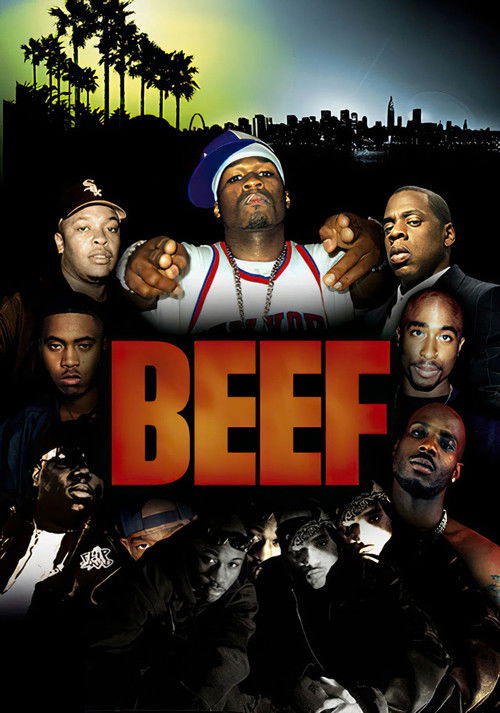
Beef
2003
No user ratings available yet
Representation score: 4.4 out of 10

Representation Score
Good
1997
RDirector
Peter Spirer
Runtime
90 minutes
Average Rating
No ratings yetNew Showbiz Analysis
Rhyme & Reason serves as a sociological study of hip-hop's rise, utilizing a structure that shifts power to the subjects through primary interviews. By avoiding a centralized narrator, the film allows diverse voices to define their own realities. The documentary is strongest in its racial and cultural representation, successfully avoiding the 'outsider looking in' cliché. It treats the genre as a legitimate response to systemic issues rather than mere social dysfunction. However, the film is limited by the era's social landscape, particularly regarding LGBTQ+ visibility. While it provides a platform for women in a male-dominated industry, the representation of disability is not addressed.
Category Breakdown
The film reflects the era's cultural constraints, where queer identities often went unaddressed in mainstream hip-hop discussions. While it doesn't center queer narratives, it offers a nuanced view of the period's social complexities.
The documentary disrupts traditional hierarchies by highlighting female emcees and influential women. It emphasizes their creative authority within a male-dominated genre.
The film excels by centering a predominantly Black and non-Anglo-Saxon cast. It prioritizes the lived experiences and internal logic of the community over an outsider's perspective.
Hip-hop is presented as a complex response to systemic environments rather than through traditional Western morality. The film frames rebellious elements as legitimate cultural expressions.
There is no significant evidence regarding the portrayal of visible or invisible disabilities within this documentary.
Present on Screen
Limited or Absent
Official Synopsis
A study in the world of hip-hop, done mostly with interviews, in order to see why it is as popular as it is today and what the future holds.
2003
2018

2005

2021

2007
2003

2004

2002
No reviews yet. Be the first to share your thoughts on this movie!
Use the rating form above to leave a star rating and optional review.