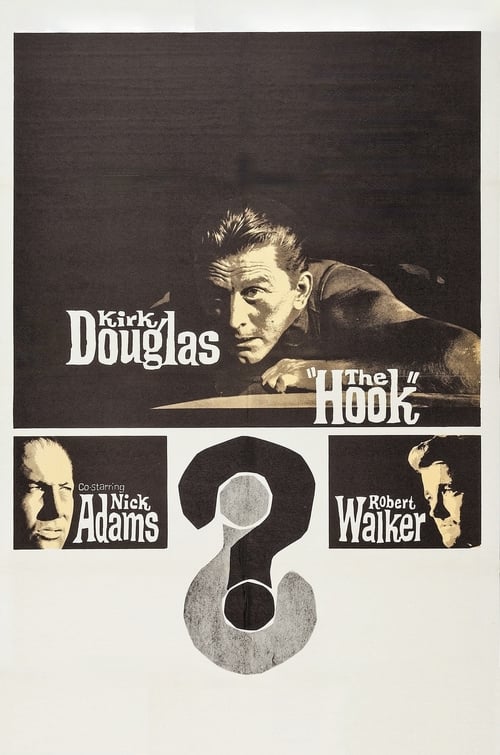
The Hook
1963
No user ratings available yet
Diversity score: 2.0 out of 10
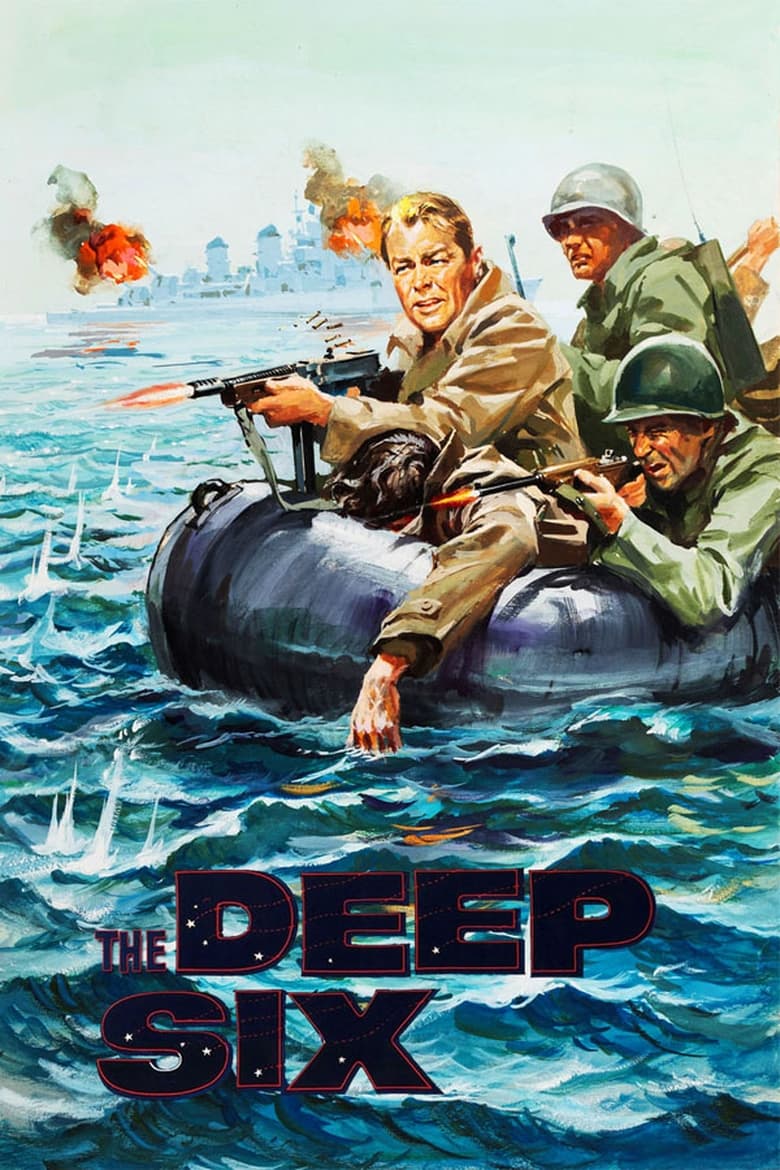
1958
NRDirector
Rudolph Maté
Runtime
105 minutes
Average Rating
No ratings yetSynopsis
The conflict between duty and conscience is explored in the WWII drama The Deep Six. Alan Ladd stars as Naval gunnery officer Alec Austin, a Quaker whose sincere pacifist sentiments do not sit well with his crew members. When he refuses to fire upon an unidentified plane, the word spreads that Austin cannot be relied upon in battle (never mind that the plane turns out to be one of ours). To prove that he's worthy of command, Austin volunteers for a dangerous mission: the rescue of a group of US pilots on a Japanese-held island. The ubiquitous William Bendix costars as Frenchy Shapiro (!), Austin's Jewish petty officer and severest critic. If the film has a villain, it is Keenan Wynn as ambitious Lt. Commander Edge, who seems to despise anyone who isn't a mainline WASP.
Overall Score
Minimal
Category Breakdown
LGBTQ+ Representation
The film operates within a hyper-masculine military environment. There is no evidence of non-cisnormative identities or same-sex intimacy present in the narrative.
Gender Representation
Women are entirely absent from the central conflict. The story focuses exclusively on masculine leadership and the stoicism of a male crew.
Racial & Ethnic Diversity
The cast is predominantly white, though the inclusion of a Jewish petty officer adds ethnic friction. This identity serves to highlight crew tensions rather than complex exploration.
Religious & Cultural Diversity
The plot explores the tension between Quaker pacifism and military duty. However, it ultimately reinforces traditional Western values of patriotism and institutional hierarchy.
Disability Representation
There are no prominent depictions of physical or neurodivergent disabilities. Characters are judged solely on their functional utility within the military structure.
Strengths
Areas for Improvement
AI Analysis
The Deep Six is a mid-century war drama that prioritizes traditional institutional loyalty over diverse perspectives. It functions as a study of masculine structures and wartime ethics, adhering strictly to the social frameworks of 1958. While the film avoids a purely Anglo-Saxon monolith by including a Jewish character, this inclusion is used primarily to drive interpersonal conflict. The narrative does not seek to challenge existing power dynamics or provide intersectional depth. Ultimately, the film lacks representation for women, LGBTQ+ individuals, and people with disabilities, remaining a product of a period focused on conventional military duty and Western values.
1963

1955
1960
1945
1964
1945
1943
1966
1968

1956

2023

1967
No reviews yet. Be the first to share your thoughts on this movie!
Use the rating form above to leave a star rating and optional review.