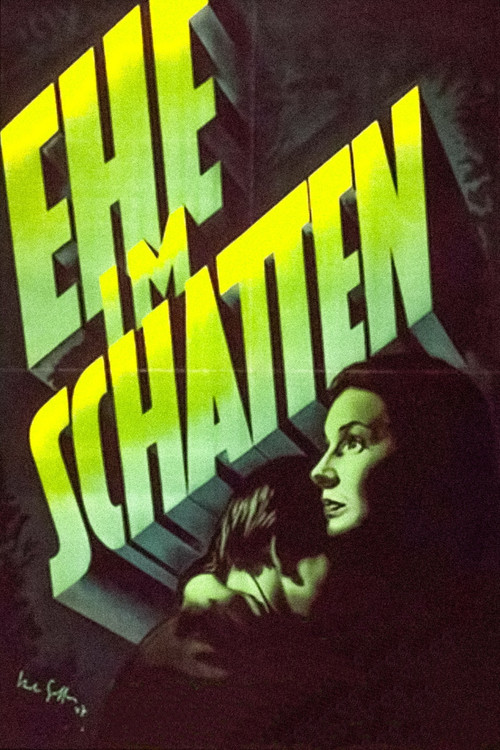
Marriage in the Shadows
1947
No user ratings available yet
Diversity score: 6.3 out of 10

1949
Director
Alfréd Radok
Runtime
104 minutes
Average Rating
No ratings yetSynopsis
Prague, during World War II. Hana Kaufmann, a Jewish ophthalmologist, marries Dr. Antonín Bureš, a Christian man. When her family is sent to the Theresienstadt concentration camp, their romance turns into a struggle for survival.
Overall Score
Good
Category Breakdown
LGBTQ+ Representation
The film lacks LGBTQ+ characters or non-heteronormative narratives. The central romantic arc focuses on the heterosexual marriage between Hana Kaufmann and Antonín Bureš.
Gender Representation
Hana Kaufmann provides the film's emotional and intellectual agency. Her professional identity as an ophthalmologist shifts the narrative weight toward female resilience and survival.
Racial & Ethnic Diversity
The film offers a profound exploration of the Jewish experience in WWII Prague. It critiques systemic erasure by centering a Jewish protagonist against a dominant social order.
Religious & Cultural Diversity
The narrative critiques the institutionalized cruelty of mid-20th-century social structures. It portrays the state and its wartime apparatus as inherently oppressive and corrupt.
Disability Representation
There is no specific evidence of intentional representation regarding neurodivergence or physical disabilities as character-driven agency, despite the film's focus on wartime trauma.
Strengths
Areas for Improvement
AI Analysis
Distant Journey serves as a powerful work of historical reclamation. It avoids romanticizing the era, instead using the protagonist's identity to dismantle myths of institutional stability. The film effectively portrays the state as a source of systemic victimhood. The narrative's strength lies in its portrayal of intersectional vulnerability. It examines how race, religion, and gender converge under the pressure of an oppressive regime. While the film lacks modern LGBTQ+ or disability-focused narratives, its focus on ethnic and professional identity provides a deeply progressive critique of wartime social hierarchies.
1947

2010

1940
2019
2001
1996
1961
1991

1948
2009
1977
2007
No reviews yet. Be the first to share your thoughts on this movie!
Use the rating form above to leave a star rating and optional review.