Les Damnés de la Commune
2021
No user ratings available yet
Representation score: 6.3 out of 10
Representation Score
Fair
2018
Director
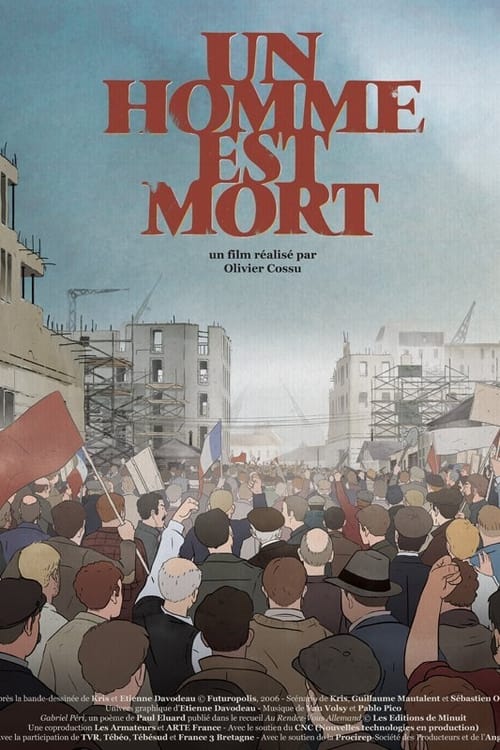
Olivier Cossu
Runtime
66 minutes
Average Rating
No ratings yetNew Showbiz Analysis
A Man is Dead is a socio-political critique that prioritizes class conflict over individual identity politics. It uses a documentary-animation hybrid to challenge traditional historical clichés of post-war recovery. The film's progressive value stems from its deconstruction of Western industrial capitalism. It celebrates labor-driven disruption and portrays institutional structures as inherently corrupt or oppressive. While the work lacks specific markers for LGBTQ+ or racial diversity, its commitment to portraying systemic victimhood and social rebellion provides a unique historical revisionism.
Category Breakdown
The film focuses on labor movements and class-based struggles. There is no explicit mention of LGBTQ+ characters or non-straight relationships within the narrative.
The story centers on workers fighting an oppressive industrial hierarchy. It challenges benevolent leadership by portraying governing bodies as sources of conflict.
Set in 1950s Brest, the film likely reflects the local demographic of the era. There is no evidence of significant racial blending in the portrayal of the masses.
The film offers a strong critique of capitalism and industrial exploitation. It frames the reconstruction of Brest as a site of systemic violence rather than simple progress.
There is no documented evidence regarding the portrayal of physical or neurodivergent disabilities in the film's primary narrative arc.
Present on Screen
Limited or Absent
Official Synopsis
Brest, 1950. The war ended five years ago and nothing remains of the city. Massive bombings and intense fighting lasting more than a month turned the city, its docks, its arsenal, into ashes. Thousands of workers will build it up again, brick by brick. But with awful work conditions protests quickly arise and a strike begins. Violent confrontations happen during manifestations. Until one man falls. The next day René Vautier lands at Brest clandestinely to make a movie about the movement.
2021
2020
2021
2018
1968

2019
2023

1977
No reviews yet. Be the first to share your thoughts on this movie!
Use the rating form above to leave a star rating and optional review.