
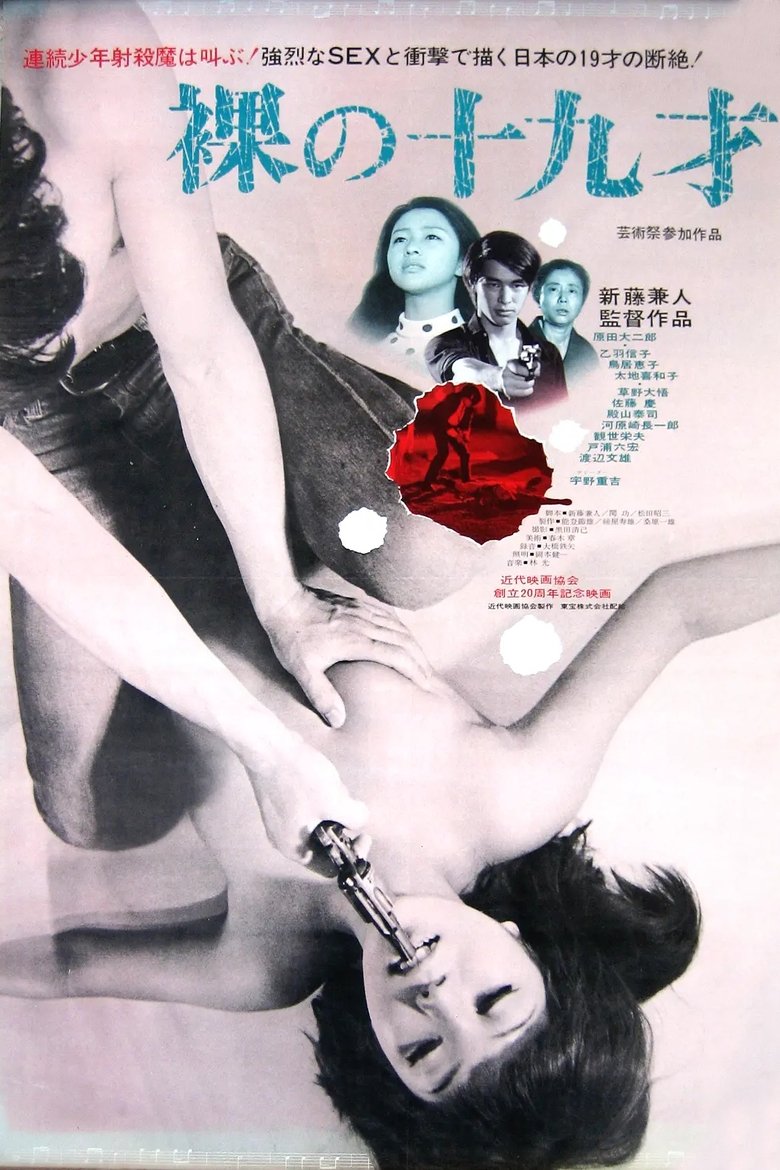
Sex Rider: Wet Highway
1971
No user ratings available yet
Diversity score: 6.1 out of 10
1970
Director
Kaneto Shindō
Runtime
120 minutes
Average Rating
No ratings yetSynopsis
Michio Yamada, a recent school graduate, is sent to Tokyo to work as a fruit-packer in a department store as part of a government programme. He takes a gun from a house on an American base and uses it to kill several people. The scene changes to Yamada's childhood. Yamada is born the child of a reprobate and a weak-willed woman. As a boy Yamada, experiences poverty and the rape of his sister at first hand.
Overall Score
Fair
Category Breakdown
LGBTQ+ Representation
The film lacks explicit queer narratives or non-cisnormative identities. It focuses instead on fractured familial and gendered dynamics within a traditional framework.
Gender Representation
Women are central to the film's exploration of systemic suffering. The narrative deconstructs the idealized domestic sphere through the trauma experienced by the protagonist's mother and sister.
Racial & Ethnic Diversity
The presence of an American base introduces geopolitical tension. This element serves as a marker for post-colonial influence and Western hegemony within Japanese life.
Religious & Cultural Diversity
The story offers a profound critique of capitalist and state-driven social engineering. It challenges Western-aligned structures by framing violence as a response to systemic poverty.
Disability Representation
There is no clear evidence of physical or neurodivergent disability representation. The film may touch on emotional fragility, but it is unclear if these are treated with agency.
Strengths
Areas for Improvement
AI Analysis
Kaneto Shindō’s work functions as a gritty critique of post-war societal structures and the failure of traditional institutions. The film moves beyond simple criminality to examine how poverty and state-mandated labor programs drive individual desperation. While the film lacks modern identity-based representation, it excels in its cultural and systemic analysis. It uses the protagonist's violent outbursts to highlight the friction between individual agency and oppressive hierarchies. Ultimately, the film is a study of systemic victimhood. It avoids a sanitized view of the family, instead using gendered violence and geopolitical tension to expose the cracks in the social fabric.
1971

1980

1966

2017

1994
1981

1978

2000

2011

1959

2012

1969
No reviews yet. Be the first to share your thoughts on this movie!
Use the rating form above to leave a star rating and optional review.