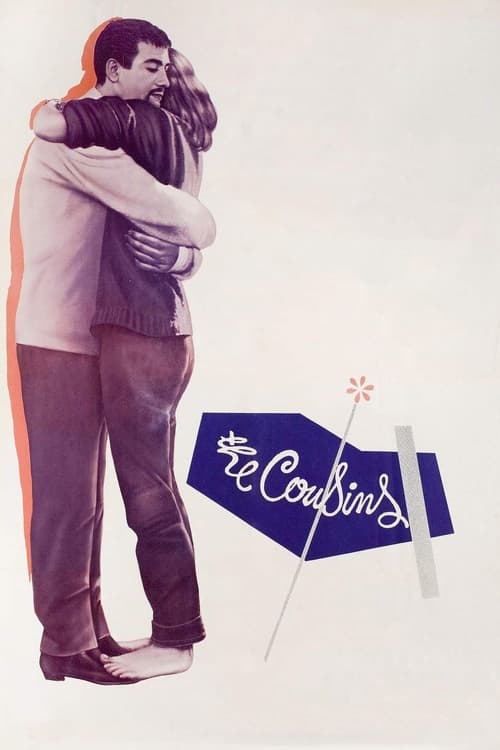
The Cousins
1959
No user ratings available yet
Representation score: 4.9 out of 10
Representation Score
Fair
1961
Director
Claude Chabrol
Runtime
99 minutes
Average Rating
No ratings yetNew Showbiz Analysis
Claude Chabrol’s work primarily critiques traditional social stability and bourgeois hypocrisy. The film opts for a relativistic view of human behavior and interpersonal power dynamics, moving away from traditional moralism. While it does not explicitly represent diverse racial or LGBTQ+ identities, it disrupts social decorum and emphasizes individual ability to act over established class hierarchies. The narrative structure favors active participation and challenges traditional moral frameworks.
Category Breakdown
The film explores a relationship triangle involving Ronald, Arthur, and Ambroisine, but there is no clear indication of LGBTQ+ identities or same-sex relationships. The narrative does not explicitly challenge traditional sexual norms.
Ambroisine plays a strategic role in the story, acting as a key player in the male-driven conflict rather than a passive character. She is positioned as an active participant, not just a bystander.
The film is set in a homogeneous social environment of 1960s Saint-Germain-des-Prés, with no evidence of a multi-ethnic cast or diverse racial identities.
By focusing on personal vendettas and situational ethics, the film critiques established social institutions and traditional bourgeois stability. It deconstructs the idea of a 'good family' archetype.
The narrative does not include any specific details about characters with physical or neurodivergent disabilities.
Present on Screen
Limited or Absent
Official Synopsis
In Paris in the early 1960s, Ronald is a son of a good family, with a carefree, pleasure-oriented life. He is one of the leading figures in the small world of Saint-Germain-des-Prés. Following a trivial parking incident, he meets Arthur, a young man with a straight face who hurts his pride. It is at this moment that Ambroisine, a beautiful young woman, appears... she will be the instrument of Ronald's revenge.
1959
1945
1969
1969

1960
1967
1969

1958
No reviews yet. Be the first to share your thoughts on this movie!
Use the rating form above to leave a star rating and optional review.