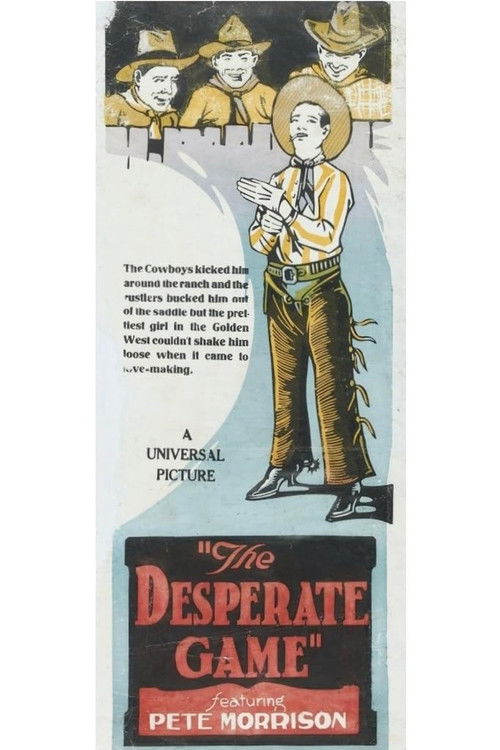
The Desperate Game
1926
No user ratings available yet
Representation score: 1.1 out of 10

Representation Score
Minimal
1924
PassedDirector
Tom Forman
Runtime
53 minutes
Average Rating
No ratings yetNew Showbiz Analysis
The film adheres to the rigid dramatic conventions of the 1920s, emphasizing traditional social hierarchies and conventional courtship. The narrative structure is centered around a male protagonist's wager, limiting the role of the female lead. Representation is heavily skewed towards a homogeneous, Western social framework. The focus on fraternity life and 'old-fashioned' values suggests a lack of engagement with diverse identities or social subversion. Ultimately, the film reinforces established norms of its era without challenging them through diverse casting or complex social commentary.
Category Breakdown
The film does not include any characters with non-binary gender identities or LGBTQ+ orientations. The plot revolves around a traditional romantic scenario and marriage proposal, reinforcing conventional heterosexual relationships.
Mary is portrayed as an old-fashioned character, adhering to traditional domestic social expectations. The narrative is driven by male control and a fraternity-based wager.
The story centers on a fraternity social setting, indicating a homogeneous cast. There is no evidence of diverse racial or ethnic representation.
The premise aligns with traditional Western social institutions and morality. The narrative reinforces established social stability without offering critical perspectives on systemic issues.
There is no information available regarding the inclusion of characters with visible or invisible disabilities.
Present on Screen
Limited or Absent
Official Synopsis
On the wager that he will propose marriage to any girl selected by his fraternity brothers, Bill finds himself making love to Mary, an old-fashioned girl who is secretly in love with him…
1926

1930

1948

1931
1919

1927

1921
1920
No reviews yet. Be the first to share your thoughts on this movie!
Use the rating form above to leave a star rating and optional review.