
Love Letter
1981
No user ratings available yet
Representation score: 3.7 out of 10
Representation Score
Excellent
1985
Director
Tatsumi Kumashiro
Runtime
108 minutes
Average Rating
No ratings yetNew Showbiz Analysis
Love Letter succeeds in subverting traditional domestic hierarchies by centering female experiences and complex emotional connections. The film moves away from a male-centric drama to explore the autonomy of the women involved in the central conflict. However, the film remains limited by its cultural homogeneity and a lack of explicit LGBTQ+ specificity. The narrative's focus on a traditional Japanese demographic reflects the era's constraints regarding racial and multi-layered diversity. Ultimately, the film is a sophisticated study of individual autonomy versus institutional stability, using personal crisis to challenge social norms.
Category Breakdown
The film explores emotional bonds that go beyond traditional marriage, suggesting a departure from conventional social structures. Specific LGBTQ+ identities are not confirmed, but the focus on intimacy transcending marital boundaries is notable.
The narrative emphasizes female characters' ability to act by focusing on the friendship between the wife and the former lover. This highlights women's emotional resilience and autonomy amid the instability caused by the male protagonist.
As a 1985 Japanese production, the film operates within a culturally homogeneous framework. It lacks diverse casting or intentional multi-layered racial blending typical of more modern cinema.
The story deconstructs the traditional nuclear family by prioritizing subjective emotional truths over patriarchal duty. It frames the breakdown of the household as a site of complex human connection.
Advanced leukemia serves as a central narrative pivot for exploring mortality. The film uses the illness to examine the fragility of human connections rather than treating it as a simple plot device.
Present on Screen
Limited or Absent
Official Synopsis
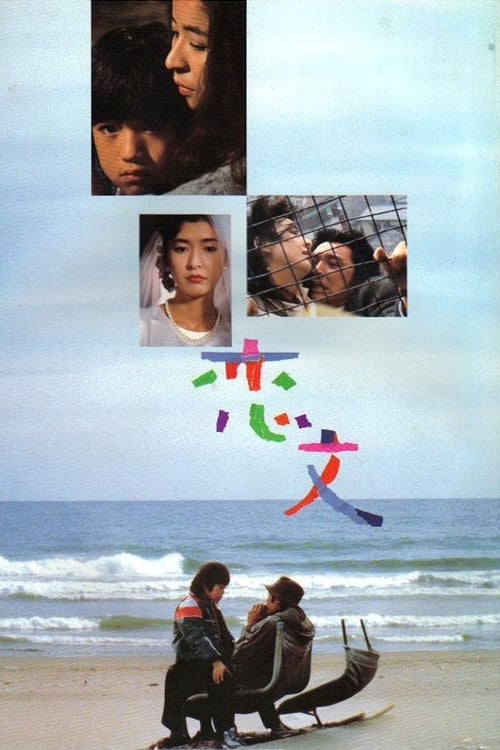
A drama depicting the conflict between a man that ran to an old lover suffering from advanced leukemia, his wife and child that were left behind, and the friendship that develops between his wife and his former lover.
1981
1961
2012
1995
1953
2005
1955

1974
No reviews yet. Be the first to share your thoughts on this movie!
Use the rating form above to leave a star rating and optional review.