
The 8-Year Engagement
2017
No user ratings available yet
Representation score: 3.9 out of 10
Representation Score
Fair
2005
Director
Naoto Takenaka
Runtime
119 minutes
Average Rating
No ratings yetNew Showbiz Analysis
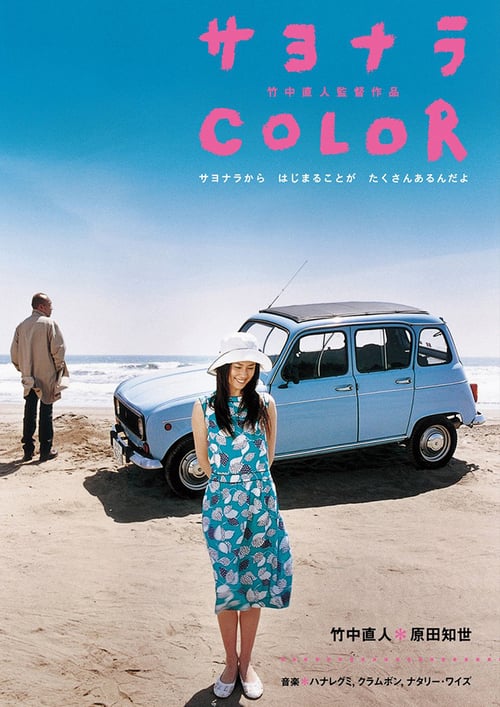
Sayonara Color is a character-driven drama that prioritizes personal sentiment and romantic nostalgia. It operates within a traditional narrative structure, emphasizing intimate human connections over systemic social critique. The film relies heavily on conventional emotional clichés. While it delves into the complexities of chronic illness and mortality, it does so through a lens of sentimentalism rather than challenging established social norms. Ultimately, the work lacks significant depth in reflecting diverse identities or institutional disruption. It remains a localized, homogeneous story that emphasizes individual experience over the exploration of varied identities.
Category Breakdown
The film does not include any LGBTQ+ characters or non-straight identities. The main romantic storyline revolves around a traditional heterosexual relationship between the protagonist and his former high school sweetheart.
Shohei holds a position of authority as a doctor. Michiko, on the other hand, serves as the emotional catalyst, but her role is initially defined by her medical vulnerability and her cancer diagnosis.
As a localized Japanese production, the film features a homogeneous cast. There is no indication of diverse racial representation within this culturally bounded setting.
The narrative emphasizes individual memory and interpersonal devotion rather than institutional critique. It aligns with conventional sentimental themes rather than challenging traditional family or social structures.
The plot focuses on ovarian cancer and terminal illness. The characters navigate these medical challenges with ability to act, offering a nuanced look at the patient-doctor relationship.
Present on Screen
Limited or Absent
Official Synopsis
Shohei works as a doctor in a seaside hospital. One day, a new patient is admitted to the hospital with ovarian cancer. Shohei is surprised to recognize Michiko, his first love from high school. Shohei has been leading a dissolute bachelor life, paying for the company of high school girls and dating an older woman who works in a local bar, but in reality, for the last twenty years, he has not forgotten Michiko. Unfortunately though, Michiko doesn't remember him at all. Shohei becomes more and more persistent in his attempts to get her to recall their past. At first she is annoyed by his overtures, but gradually warms to the doctor. Under Shohei's kind and patient care, Michiko's condition improves and her cancer becomes operable. The operation is a success, but now Shohei himself learns that he has terminal cancer.
2017

2009
2003
2017
2001

2020
2020
1993
No reviews yet. Be the first to share your thoughts on this movie!
Use the rating form above to leave a star rating and optional review.