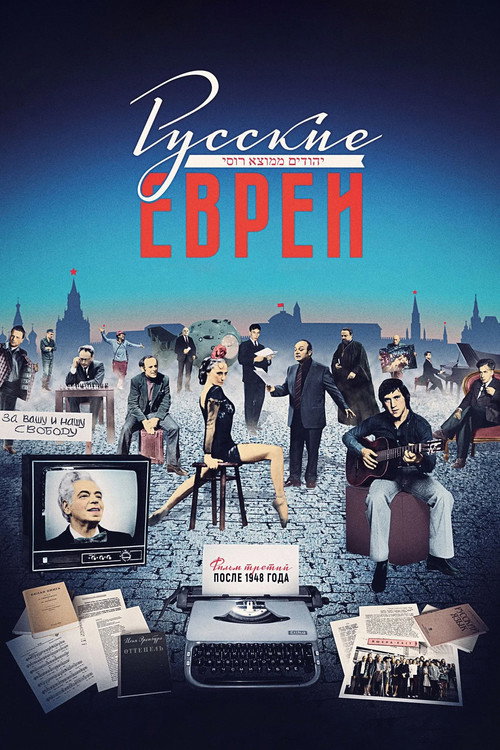
Russian Jews. Part Three. After 1948.
2017
No user ratings available yet
Representation score: 3.1 out of 10
Representation Score
Fair
2017
Director
Sergey Nurmamed
Runtime
120 minutes
Average Rating
No ratings yetNew Showbiz Analysis
This documentary serves as a crucial historical record that challenges the monolithic view of Russian history. By highlighting the active role of the Jewish community, it transforms passive subjects into active participants in state policy and culture. The film’s strength lies in its focus on ethnic identity, disrupting traditional homogeneous narratives. However, it lacks depth in addressing modern multi-layered issues such as gendered power dynamics or LGBTQ+ identities. Ultimately, the work offers a significant shift from homogeneous narratives by documenting the substantial influence of a specific minority during a period of major societal change.
Category Breakdown
The documentary does not include visible representation of non-binary or transgender identities, which aligns with the social norms of the 1918–1948 era rather than indicating a negative portrayal.
While the film emphasizes the significant role of Jews in state policy and culture, it does not specifically highlight the roles of women or challenge traditional gender hierarchies.
The film gives a prominent role to a historically underrepresented group, disrupting the homogeneous historical narrative by focusing on the active role of Jewish individuals in cultural and political history.
The narrative examines the relationship between ethnic identity and state institutions. It likely addresses the tensions between traditional religious practices and the secular changes of the early Soviet era.
There is no indication that disability or neurodivergence is a central theme or documented element within this historical survey.
Present on Screen
Limited or Absent
Official Synopsis
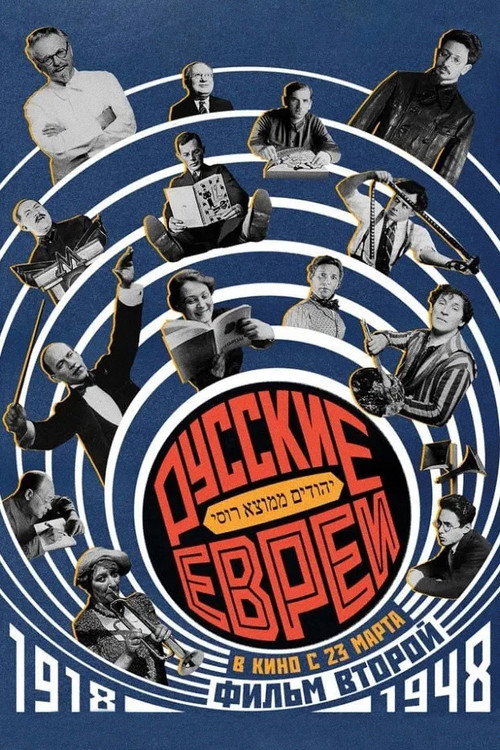
The second film of the trilogy covers the thirtieth anniversary from 1918 to 1948. Unprecedented until that time in any country of the world, a bright and massive Jewish participation in all spheres of state policy and culture.
2017
1935
2016
1913

1983
2013
2013
1998
No reviews yet. Be the first to share your thoughts on this movie!
Use the rating form above to leave a star rating and optional review.