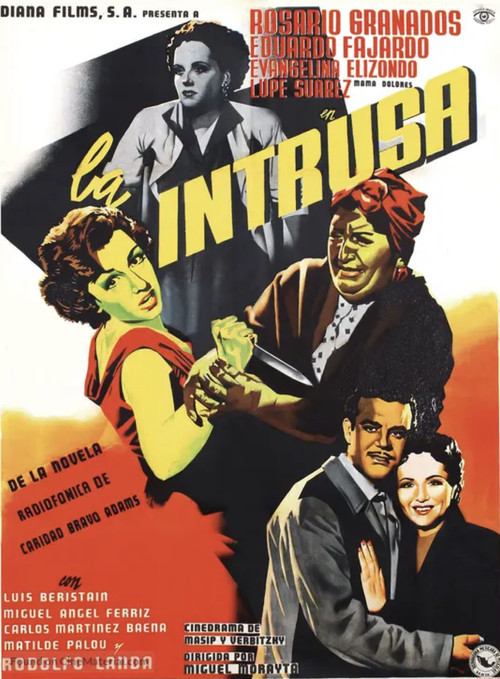
The Intruder
1954
No user ratings available yet
Representation score: 2.6 out of 10
No Poster Available
Representation Score
Fair
1955
Director
Miguel M. Delgado
Runtime
103 minutes
Average Rating
No ratings yetNew Showbiz Analysis
Pecado Mortal operates as a classic mid-century melodrama, prioritizing moral absolutism and domestic conflict over social subversion. While the film provides a glimpse of women's ability to drive the story through Clara's resistance to her husband, the narrative remains tied to traditional hierarchies. The film's structure relies heavily on the clichés of the era, using disability and gendered vulnerability to drive the plot. It explores individual secrets and familial vengeance rather than challenging broader social structures. Ultimately, the work reinforces a restorative moral order typical of the Golden Age of Mexican cinema, focusing on character-driven melodrama rather than progressive representation.
Category Breakdown
The film does not include any characters with non-straight identities. The plot revolves around traditional marriages and romantic relationships between men and women.
Clara takes control by refusing her husband's demands, challenging patriarchal control. However, she is also defined by her physical vulnerability and domestic confinement.
The cast is predominantly non-Anglo-Saxon, reflecting the film's Mexican production roots. The narrative focuses on class and morality rather than exploring multiple aspects of racial identity.
The story emphasizes traditional moralism and the consequences of sin. It centers on vengeance and family sanctity, aligning with mid-century conservative values.
Clara's blindness is a central plot element used to facilitate manipulation. There is a risk the disability serves primarily as a dramatic device for the victim narrative.
Present on Screen
Limited or Absent
Official Synopsis
Juan Manuel intends his wife Clara, who is blind, sign the will in his favor, but she refuses. With them lives Soledad, goddaughter Clara. A day comes Carlos, nephew of Juan Manuel, who is interested in Soledad. Carlos is going to study medicine in the United States and maintains correspondence with Soledad. Juan Manuel shows interest in Soledad but prevents Clara meet her. She is the daughter of Clara, who hid that Juan Manuel had killed the father of Soledad and also caused her blindness.
1954
1955

1949
1962
1950
1950
1958
1948
No reviews yet. Be the first to share your thoughts on this movie!
Use the rating form above to leave a star rating and optional review.