
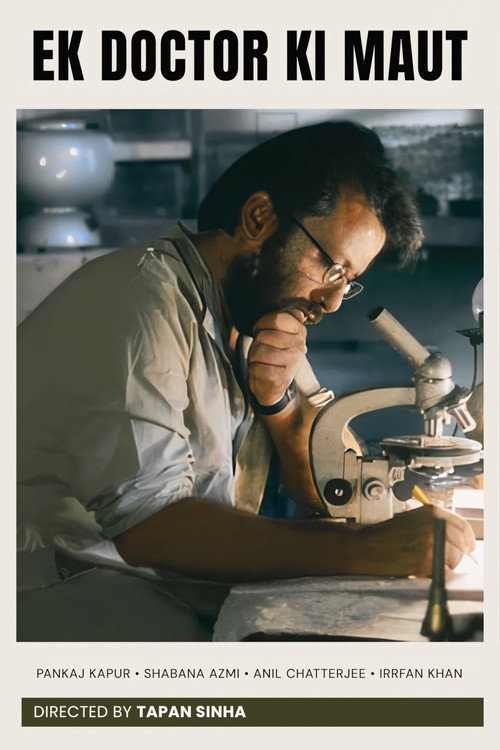
An Enemy of the People
1990
No user ratings available yet
Representation score: 3.1 out of 10
Representation Score
Excellent
1990
Not RatedDirector
Tapan Sinha
Runtime
133 minutes
Average Rating
No ratings yetNew Showbiz Analysis
Tapan Sinha’s drama serves as a critique of systemic corruption and institutionalized oppression. By focusing on a junior doctor’s struggle against professional jealousy, the film prioritizes intellectual merit over seniority and established hierarchies. The narrative shifts the focus away from Western-centric medical history by centering a South Asian scientific breakthrough. This provides a localized perspective on global medical advancements. While the film engages with themes of chronic illness and the disruption of traditional domestic roles, it lacks specific details regarding LGBTQ+ representation or the individual ability to act of female characters.
Category Breakdown
The film does not include explicit representations of LGBTQ+ identities or narratives. It does not address queer issues or challenge assumptions about straight relationships.
The story highlights tension between scientific research and domestic life, suggesting a disruption of traditional gender roles. However, the specific actions and roles of female characters are not detailed.
As an Indian production, the film centers a non-Western perspective. The protagonist's scientific breakthrough challenges the dominance of Western-centric medical institutions.
The narrative critiques established power structures and institutional hierarchies. It emphasizes individual scientific truth over the preservation of potentially oppressive professional norms.
While no specific disabled characters are detailed, the focus on a leprosy vaccine engages with chronic illness. The story addresses the realities of historically underrepresented populations affected by chronic conditions.
Present on Screen
Limited or Absent
Official Synopsis
After years of painstaking research at the cost of his domestic affairs, Dr. Dipankar Roy is working on a vaccine for leprosy. As the word slowly gets out in medicine, he becomes vulnerable to the professional jealousy, incompetence, and abuse of power from the medical department.
1990
1965

1994
1971

2013
1971
1991
2017
No reviews yet. Be the first to share your thoughts on this movie!
Use the rating form above to leave a star rating and optional review.