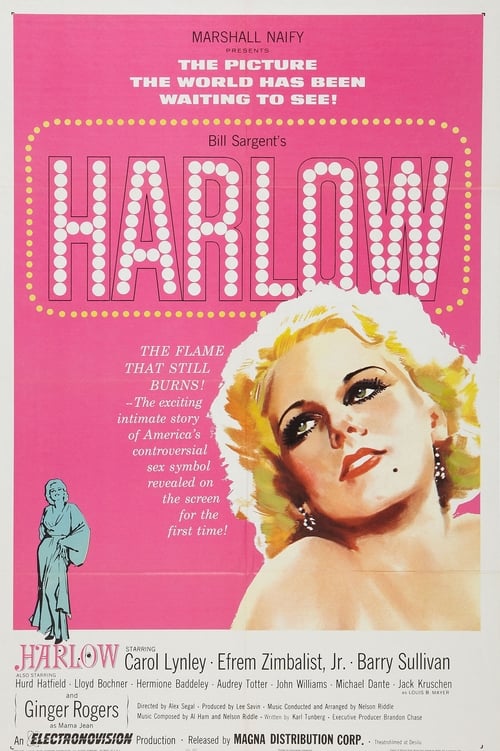
Harlow
1965
No user ratings available yet
Representation score: 1.8 out of 10

Representation Score
Minimal
1965
ApprovedDirector
Gordon Douglas
Runtime
125 minutes
Average Rating
No ratings yetNew Showbiz Analysis
Harlow is a period biographical drama that functions within the established social hierarchies of the mid-1960s studio system. It prioritizes traditional character archetypes and follows a standard trajectory of individual stardom. The film lacks intentionality in disrupting cultural norms. Instead, it reinforces the patriarchal frameworks of the era, particularly regarding how female success is mediated by male authority figures. Ultimately, the production serves as a conventional portrait of Hollywood history rather than a diverse exploration of identity.
Category Breakdown
The film follows a strictly heterosexual romantic storyline. There are no visible LGBTQ narratives or identities present in the story.
While centered on a female protagonist, Harlow's role is limited. Her life is largely shaped by the influence of various male figures and family members.
The production reflects the homogeneous casting standards of the 1930s Hollywood era. There is no evidence of diverse or multi-layered representation.
The narrative adheres to a traditional biographical structure focused on the American Dream. It emphasizes conventional morality and standard Hollywood stardom clichés.
The film contains no mention of characters navigating physical, neurodivergent, or mental health conditions.
Present on Screen
Limited or Absent
Official Synopsis
Jean Harlow arrives in Los Angeles as a teenager, pushed into showbiz by her mother and stepfather. Kindhearted agent Arthur Landau becomes Jean's mentor, while a devious Howard Hughes-like mogul grows infatuated with the beautiful young actress. Harlow herself falls for producer Paul Bern before tragedy strikes.
1965

1982

1976

2001
1957

1955

2014

2009
No reviews yet. Be the first to share your thoughts on this movie!
Use the rating form above to leave a star rating and optional review.