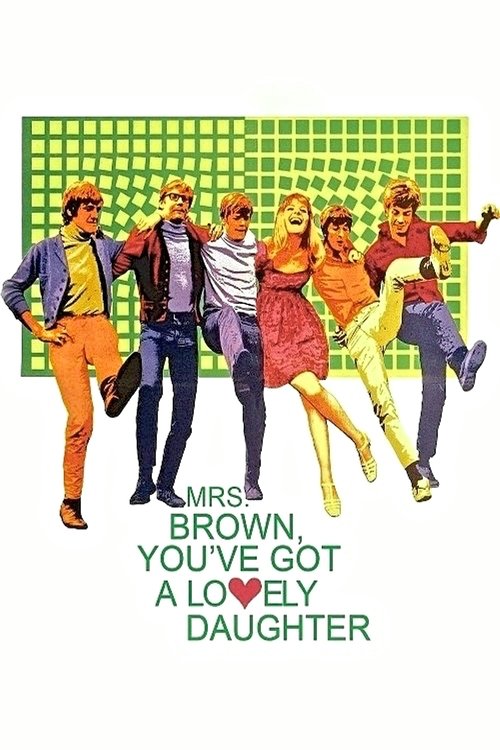
Mrs. Brown, You've Got a Lovely Daughter
1968
No user ratings available yet
Representation score: 3.3 out of 10
Representation Score
Minimal
1965
TV-PGDirector
Kenneth Hume
Runtime
92 minutes
Average Rating
No ratings yetNew Showbiz Analysis
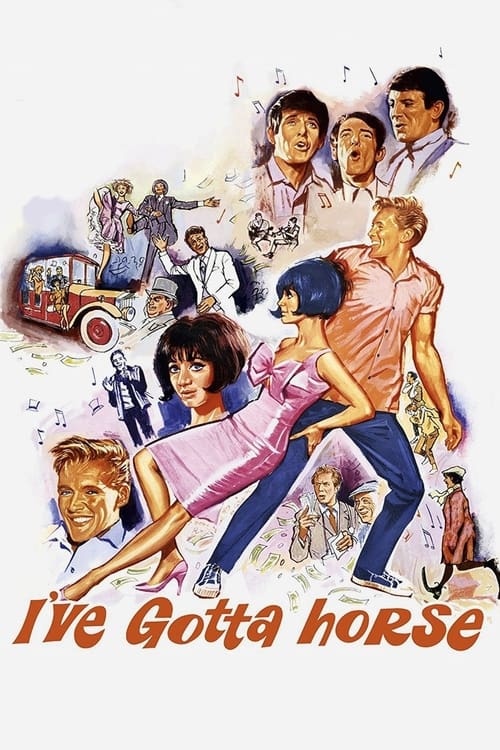
I've Gotta Horse is a traditional mid-century musical comedy that prioritizes star-driven entertainment over social commentary. The narrative is centered around the celebrity persona of Billy Fury, focusing on his personal affinity for animals and horse racing. The film adheres to the demographic and thematic norms of its era. It lacks the intentionality needed to challenge social hierarchies or provide depth in reflecting multiple aspects of diversity, resulting in a narrow narrative scope. Ultimately, the production functions as a lighthearted genre piece. It relies on established clichés rather than attempting to go beyond familiar patterns.
Category Breakdown
The film does not include any representation of LGBTQ+ identities or narratives. It focuses on Billy Fury's celebrity persona and his love for animals within conventional social structures.
The story centers on a male protagonist and his personal interests. Female characters have limited roles and do not significantly influence the plot, reinforcing a standard mid-century celebrity-centric model.
The production reflects the homogeneous casting norms of 1960s British musical comedies. There is no indication of a multi-ethnic cast or diverse ethnic representation.
Themes revolve around personal passion and animal companionship. The narrative operates within a standard framework of celebrity lifestyle without questioning Western institutions.
There is no evidence of meaningful representation regarding neurodivergence or physical disabilities. Disability is not used as a plot device in this production.
Present on Screen
Limited or Absent
Official Synopsis
A fast-moving comedy with Billy Fury, who plays himself in the film. The story reveals his great love of animals, and it features his own racehorse, Anselmo. Also featured are several of Billy's own dogs.
1968
1963
1965
1937
1938
1930
1960
1969
No reviews yet. Be the first to share your thoughts on this movie!
Use the rating form above to leave a star rating and optional review.