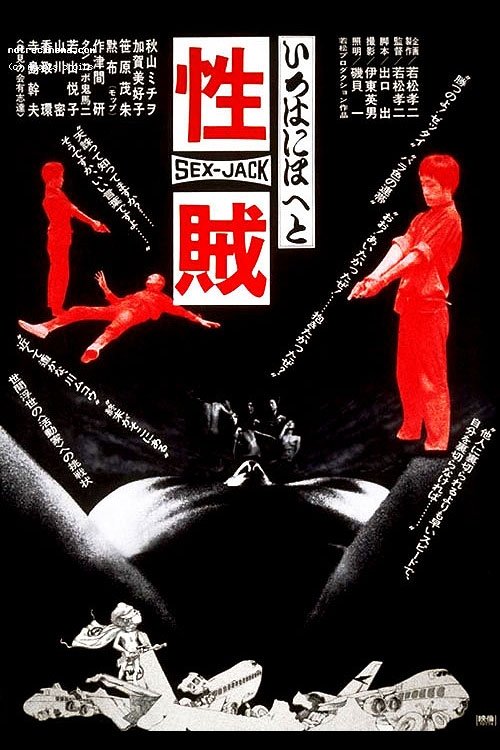
Sex Jack
1970
No user ratings available yet
Representation score: 4.4 out of 10

Representation Score
Good
1972
Not RatedDirector
Kōji Wakamatsu
Runtime
89 minutes
Average Rating
No ratings yetNew Showbiz Analysis
Kōji Wakamatsu’s work functions as a progressive text that dismantles traditional pillars of society, such as the family unit and state authority. By intertwining political radicalism with sexual transgression, the film prioritizes identity-driven rebellion over conventional morality. The film excels in its cultural critique and its subversion of gendered power dynamics. It replaces patriarchal structures with a landscape of fluid, chaotic dynamics, using sexual decadence as a method of political defiance. However, the film remains limited by its cultural homogeneity and a lack of explicit queer character development. While it rejects Western-centric casting, it stays within a localized Japanese framework, and its exploration of non-normative sexuality remains largely thematic rather than character-driven.
Category Breakdown
The film explores non-normative sexualities through the lens of the pinku eiga movement. While specific queer character arcs are not explicitly detailed, the narrative emphasizes sexual experimentation and a rejection of traditional heterosexual norms.
Female characters are elevated from passive subjects to active participants in a radicalized counterculture. The film disrupts conventional hierarchies by framing sexual liberation as a tool of political rebellion and empowerment.
The cast is culturally homogeneous, reflecting its specific Japanese historical context. It avoids a Western-normative gaze by centering a localized, radicalized Japanese youth identity rather than multi-ethnic casting.
The narrative offers a profound critique of Western-aligned institutions and capitalist stability. It portrays the established social order as an oppressive force that must be dismantled through political and sexual revolution.
There is no significant evidence regarding the portrayal of physical or neurodivergent disabilities within the film.
Present on Screen
Limited or Absent
Official Synopsis
A militant revolutionary group is torn apart by betrayal as its members descend into paranoia and sexual decadence.
1970

1978

1969

1976

1969

1967
1971

1969
No reviews yet. Be the first to share your thoughts on this movie!
Use the rating form above to leave a star rating and optional review.