Bürger Schippel
1964
No user ratings available yet
Representation score: 3.3 out of 10
Representation Score
Minimal
1958
Director
Hans Deppe
Runtime
97 minutes
Average Rating
No ratings yetNew Showbiz Analysis
Hans Deppe’s comedy accurately captures the social dynamics of 1950s rural Germany. It emphasizes traditional storytelling focused on male camaraderie and social hierarchies, avoiding any challenges to the status quo. The film lacks diversity, presenting a homogeneous demographic that mirrors its historical context. Its narrative structure reinforces mid-century norms through its focus on local social dynamics. Overall, the work is centered on nostalgia and masculinity, offering little in the way of social subversion or diverse representation.
Category Breakdown
The film follows the social norms of the 1950s, showing no same-sex relationships or non-straight identities. It centers on traditional male friendships and bonds.
The story revolves around male competition and friendship. Female characters play conventional social roles without taking active roles or challenging existing hierarchies.
The cast is mostly white and uniform, reflecting the demographics of its time. It portrays a rural German community with a single ethnic background.
The film shows traditional community structures and values typical of the 1950s. It emphasizes social cohesion and communal norms without significant criticism.
There are no prominent characters with disabilities that influence the story or provide meaningful representation.
Present on Screen
Limited or Absent
Official Synopsis
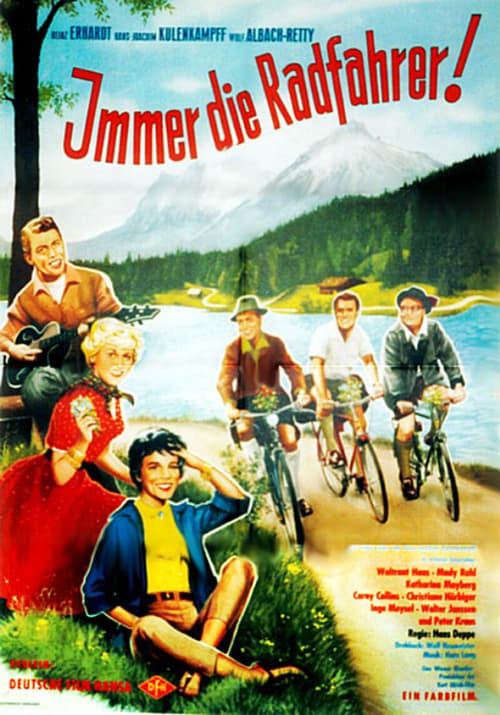
Three childhood friends go on another bike tour after 20 years of no contact.
1964
1964
1964
1956
1957

1961
1967
1950
No reviews yet. Be the first to share your thoughts on this movie!
Use the rating form above to leave a star rating and optional review.