Karl Marx City
2017
No user ratings available yet
Representation score: 8.1 out of 10
Representation Score
Fair
1994
BtlDirector
Fredrik von Krusenstjerna
Runtime
61 minutes
Average Rating
No ratings yetNew Showbiz Analysis
Betrayal is a historical and political inquiry rather than a film designed for demographic representation. It focuses on the tension between individual identity and the systemic mechanisms of state control during the GDR era. The documentary succeeds in its cultural deconstruction of political loyalty. It provides a nuanced look at how identity becomes fragile when caught between personal conviction and state-mandated surveillance. However, the film lacks breadth in racial and gender diversity. Its scope is inherently limited by its specific geographic and historical focus on mid-to-late 20th-century Europe.
Category Breakdown
The film centers on Sascha Anderson, a key figure in the Prenzlauer Berg opposition scene. While specific identities aren't explicitly stated, the historical context suggests a narrative space where non-straight and non-cisgender identities intersected with political dissent.
The documentary prioritizes a male-centric perspective, focusing on the relationship between Björn Cederberg and Anderson. It leans toward masculine modes of investigative inquiry without centering women's ability to drive the story or subverting traditional gender hierarchies.
Set across Berlin, Jena, Weimar, and Rome, the film is a localized European study. The subjects reflect the demographic homogeneity of the former GDR and Western Europe, offering limited diversity in race and ethnicity.
The film disrupts conventional history by examining the moral ambiguity of resistance movements. It challenges hero-villain binaries by presenting a subject who was both a cultural leader and a state informant.
There is no discernible focus on physical or neurodivergent disabilities within the documented narrative.
Present on Screen
Limited or Absent
Official Synopsis
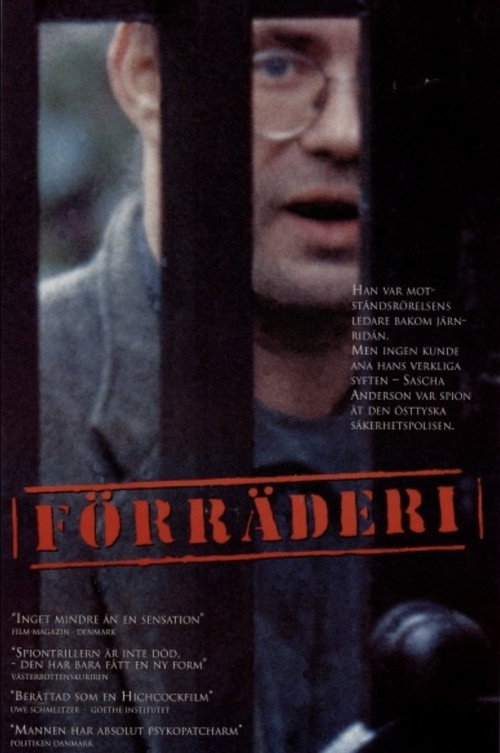
Journalist Björn Cederberg travels to Berlin, Jena, Weimar and Rome to meet his old friend, the cultural worker Sascha Anderson. He got to know Anderson in 1983 in the GDR, where he was a central figure among opposition writers and artists in East Berlin's Prenzlauer Berg. Cederberg has a hard time believing that it is true that the media reports, namely that for 20 years Anderson has been an informant to Stasi, the East German authority that spied on its own citizens.
2017
2020

2025

2011
2008
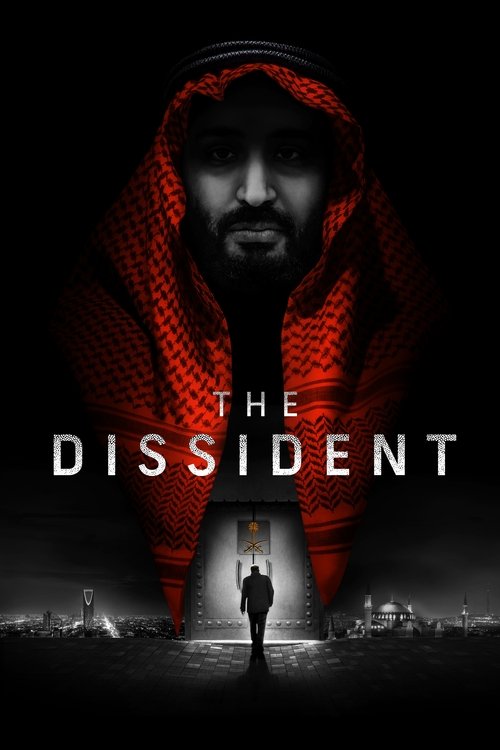
2020
1992

2012
No reviews yet. Be the first to share your thoughts on this movie!
Use the rating form above to leave a star rating and optional review.