
Midnight Stalker
2002
No user ratings available yet
Representation score: 4.3 out of 10
Representation Score
Limited
1971
PGDirector
Richard Fleischer
Runtime
89 minutes
Average Rating
No ratings yetNew Showbiz Analysis
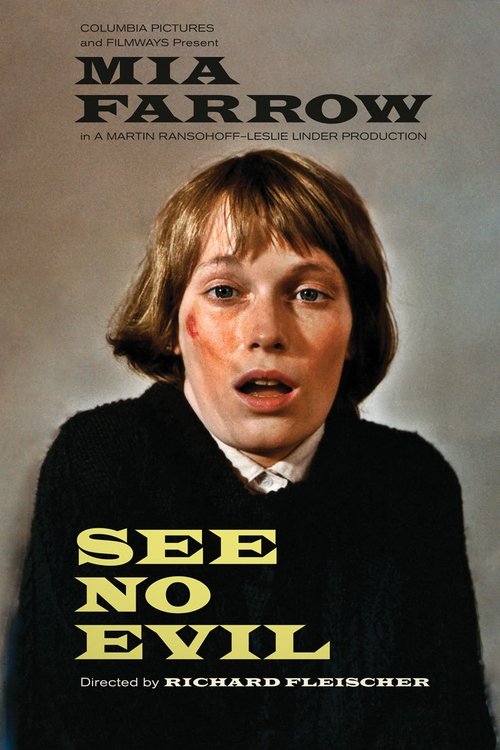
See No Evil is a conventional 1970s thriller that reflects the demographic norms of its era. It functions primarily as a genre piece, prioritizing suspense and psychological tension over social commentary or multi-layered complexity. The film's strongest contribution is its engagement with disability. By centering the plot on a character adjusting to blindness, the film moves beyond using the condition as a mere plot device, giving the protagonist a significant role in her survival strategy. However, the film remains socially conservative. It reinforces traditional hierarchies and lacks representation of diverse racial, ethnic, or LGBTQ+ identities, maintaining a homogeneous and straight-focused worldview.
Category Breakdown
The film does not include any LGBTQ+ characters or explore non-straight relationships. The narrative stays focused on suspense without any queer undertones.
The story follows traditional genre clichés where the female protagonist's journey is defined by her vulnerability. Her resilience is shown within a domestic, family setting.
Set in the English countryside, the film features a predominantly white cast with no evidence of diverse ethnic integration or color-blind casting.
The film emphasizes traditional Western social stability and family structures. It lacks significant secularist or anti-Western critiques, focusing instead on protecting a stable environment.
The narrative centers on a protagonist navigating blindness. While it risks portraying the character as a vulnerable victim, the character uses sensory shifts as a survival strategy.
Present on Screen
Limited or Absent
Official Synopsis
In the English countryside, Sarah Rexton, recently blinded in a horse riding accident, moves in with her uncle's family and gallantly adjusts to her new condition, unaware that a killer stalks them.
2002

1969
1973
1972

1950

1961

1972
1970
No reviews yet. Be the first to share your thoughts on this movie!
Use the rating form above to leave a star rating and optional review.