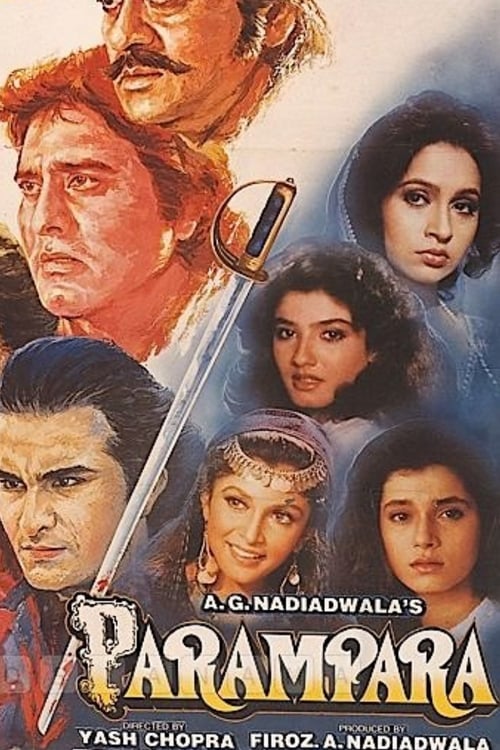
Parampara
1993
No user ratings available yet
Representation score: 1.4 out of 10

Representation Score
Minimal
2002
Not RatedDirector
Indra Kumar
Runtime
156 minutes
Average Rating
No ratings yetNew Showbiz Analysis
Rishtey is a classic Bollywood melodrama that prioritizes the preservation of conventional social hierarchies. While it offers a grounded look at Indian domestic life, the story is built to reinforce rather than disrupt established cultural norms. The film relies heavily on traditional archetypes, centering the narrative on the resilience of the family unit. This approach maintains a predictable social structure where gender and authority roles remain largely static. Ultimately, the film serves as a celebration of traditional institutions. It emphasizes moral continuity and familial duty over the subversion of power dynamics or the exploration of diverse identities.
Category Breakdown
The film operates within a strictly straight-centered framework. There is no presence of non-traditional gender identities or same-sex intimacy.
Komal plays a significant role in defying her father's expectations, yet her journey remains tied to her role as a mother. Suraj reinforces traditional masculine roles as the provider for his family.
The cast provides a cohesive representation of Indian ethnic identity. It offers a culturally specific experience without engaging in whitewashing or including someone from a minority group without giving them real depth.
The story celebrates traditional values regarding marriage and social order. It prioritizes familial duty and the sanctity of the domestic unit.
The narrative lacks any significant depiction of visible or invisible disabilities. It focuses on socioeconomic struggles instead.
Present on Screen
Limited or Absent
Official Synopsis
Suraj Singh is a wrestler by profession and has the misfortune of falling in love with wealthy Yashpaul Chaudhary's daughter Komal. When Yashpaul learns of there relationship he arrogantly disagrees of his daughter's choice but Komal refuses to accept her dad's word and gets married to Suraj without the blessings of Yashpaul. Aggravated by his daughter's act Yashpaul connote some negative scenes which spoil Suraj's character in the eyes of Komal resulting in the couple's separation. Before separation, Komal has given birth to a baby boy, which Yashpaul had wanted to kill but Suraj escapes with the child and single-handily brings him up in a poor environment. Years later Komal will return and demand that her child is handed over to her even if having to appeal to the judicial system.
1993

1989

1982

1994

1982

2024
2002
1981
No reviews yet. Be the first to share your thoughts on this movie!
Use the rating form above to leave a star rating and optional review.