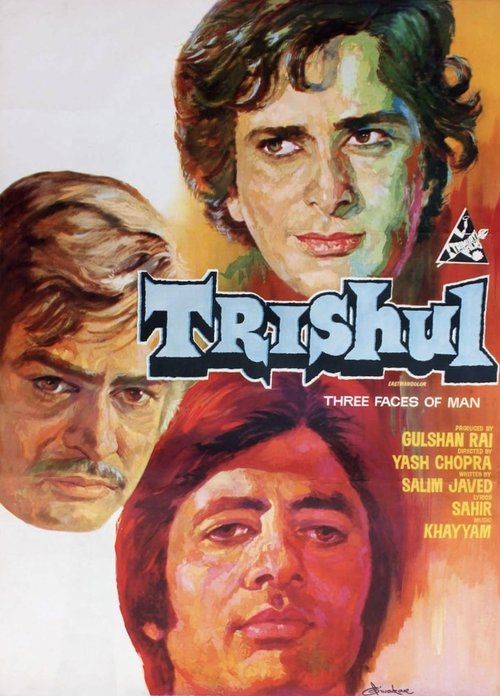
Trishul
1978
No user ratings available yet
Representation score: 2.7 out of 10

Representation Score
Limited
1982
Director
Subhash Ghai
Runtime
168 minutes
Average Rating
No ratings yetNew Showbiz Analysis
Vidhaata is a classic 1980s masala epic that emphasizes traditional themes of destiny, familial honor, and moral integrity. The narrative structure revolves around the tension between individual morality and systemic corruption through a patriarchal lens. While the film provides depth through its central moral conflict, it does not aim to challenge traditional social hierarchies. It operates within the established cultural norms of its time, focusing on restorative justice and class-based storytelling.
Category Breakdown
The film adheres to a strictly heterosexual and cisgender framework. There is no indication of queer subtext or non-binary identities in the storyline.
Female characters mainly serve as emotional anchors or victims of circumstance. Although Durga is part of the central romance, the narrative remains focused on patriarchal struggles.
The cast is culturally uniform, reflecting a domestic Indian production. It highlights internal socioeconomic differences, contrasting the working class with the capitalist elite.
The story examines tensions between traditional values and wealth. It upholds the sanctity of family and duty without offering a broader critique of institutions.
There are no prominent portrayals of physical or neurodivergent disabilities that significantly influence the narrative or serve as key character traits.
Present on Screen
Limited or Absent
Official Synopsis
When a Police inspector is killed by a band of thugs, his grieving father Samsher Singh seeks justice. Pratap Singh has left behind a pregnant widow, who dies in chidbirth, leaving Samsher to bring up the child Kunal. The transformation of Samsher Singh (a locomotive engine driver) into Sobhraj, multi millionaire and owner of a vast network of business. Kunal is brought up by Abu Baba, a servant of Sobhraj to be honest, upright, and very independent minded. Durga, the daughter of a former employee of Sobhraj, who is serving time and Kunal fall in love. This not acceptable to his grandfather, though Abu Baba approves of the relationship. Disaster strikes when an attempt is made to separate the lovers. The life of Samsher Singh alias Sobhraj begins to unravel from here. How Kunal's ethical upbringing by his foster-father, and his financial and business circumstances of his grandfather meet in a titanic conscience clash and how he resolves matters is at the nexus of the plot.
1978

1989
2014
1985
1978
1991
1985
1988
No reviews yet. Be the first to share your thoughts on this movie!
Use the rating form above to leave a star rating and optional review.