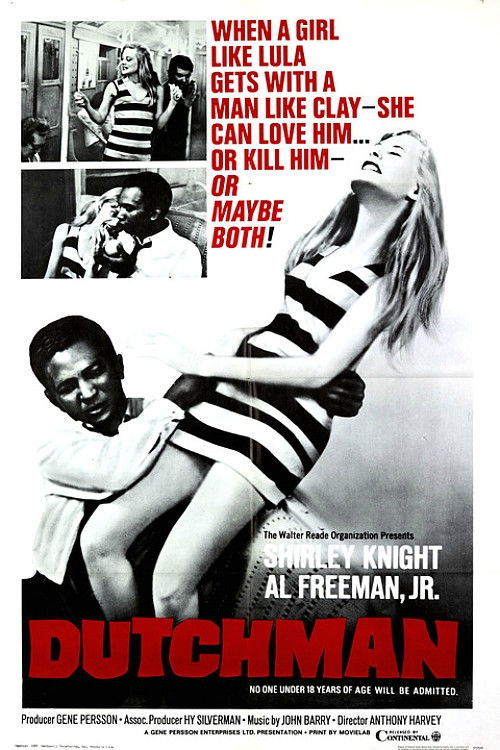
Dutchman
1966
No user ratings available yet
Representation score: 4.2 out of 10
Representation Score
Limited
1972
PGDirector
Michael Schultz
Runtime
84 minutes
Average Rating
No ratings yetNew Showbiz Analysis
Together for Days opens in the sun-drenched streets of 1970s Atlanta, where the bright, clean aesthetic of the era masks the volatile political currents beneath. Directed by Michael Schultz, this independent blaxploitation drama centers on Gus, a Black radical activist, and Shelley, a young White woman, whose attraction defies the rigid social boundaries of the time. The film’s argument is that personal connection can survive—and even thrive within—political and racial tension, treating the interracial relationship not as a scandal, but as a natural human development. The sold meaning is one of endurance over ideology. The camera loves the physicality of the couple’s bond, framing their intimacy as a refuge from the "charged atmosphere" of early 1970s America. While the film acknowledges the external pressures of race and politics, it refuses to let those forces dictate the moral verdict. Instead, the narrative rewards the couple’s ability to navigate their differences through shared experience rather than abstract debate. This creates a tension: the film’s internal logic suggests that private love is a neutral space, even when the public sphere is deeply divided. The ending settles on the couple’s physical togetherness, a quiet assertion that their relationship is valid and sustainable. This is a progressive move for 1972, inverting the typical period trope where interracial love is punished or tragic. However, the film does not fully dismantle the traditional hierarchy of gender or class; it simply adds race to the mix. The Black male lead is competent and desirable, but the narrative still relies on the white female lead’s emotional stability to anchor the story. The film’s true strength lies in its refusal to make the interracial relationship a lesson, allowing it to exist as a simple, if complex, human story.
Category Breakdown
No queer characters, intimacy, or discussion appear in the cast or plot. The narrative focuses exclusively on a heterosexual interracial couple and their straight friends.
Shelley anchors the emotional center, but Gus retains the provider role. The film frames their bond as mutual endurance rather than inverting traditional gender hierarchies.
The interracial relationship between Gus and Shelley is the central plot, not a subplot. Black men like Samuel L. Jackson (Stan) hold significant screen time and agency within the ensemble.
The film treats the 1970s political climate as a backdrop for personal connection. It avoids treating race as a tragedy, instead framing the relationship as a natural, if challenging, human dynamic.
No characters with disabilities appear in the cast or narrative. The ensemble is physically able-bodied, with no impairment depicted or discussed.
Present on Screen
Limited or Absent
Official Synopsis
A black radical activist and a young White woman find themselves drawn to one another during the politically and racially-charged atmosphere of early 1970s America.
1966
1965
1964

1960
1981

1989
1981
1977
No reviews yet. Be the first to share your thoughts on this movie!
Use the rating form above to leave a star rating and optional review.