Class Divide
2016
No user ratings available yet
Diversity score: 6.5 out of 10
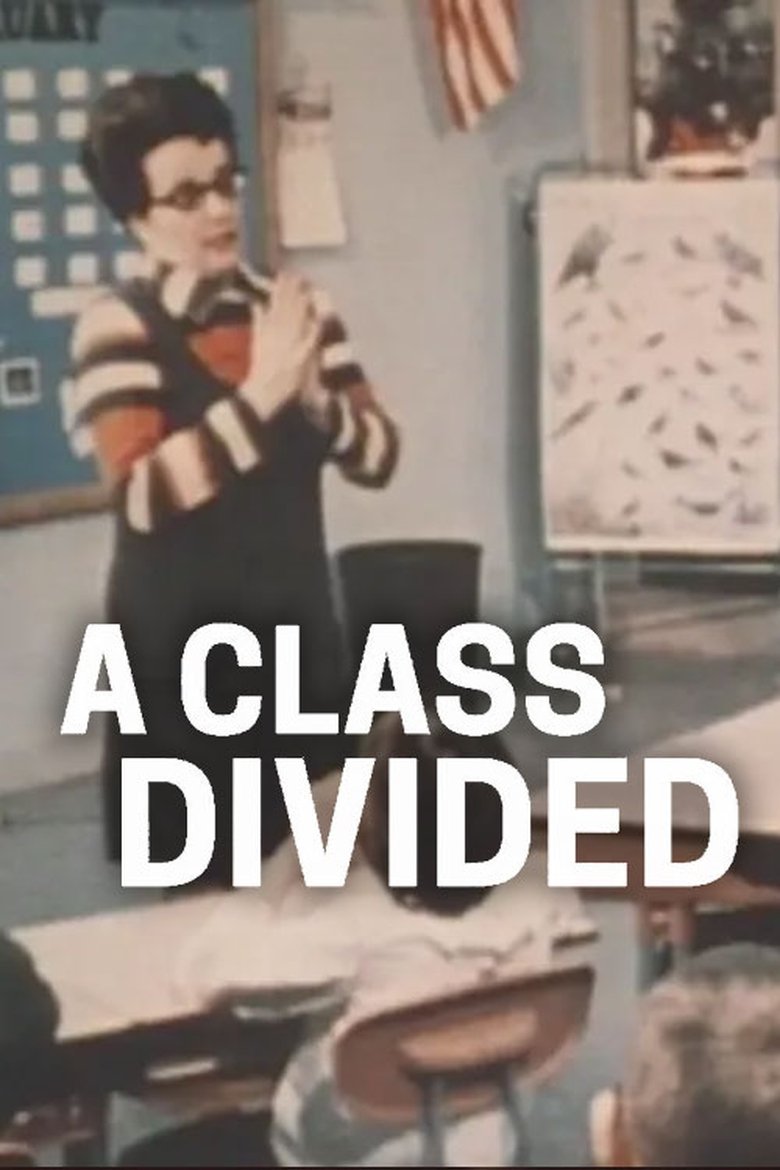
1985
Director
William Peters
Runtime
53 minutes
Average Rating
No ratings yetSynopsis
William Peters follows up on the 1970 TV documentary Eye of the Storm about Jane Elliott's experiment of dividing an otherwise homogenous group of school kids by their eye color. The episode intercuts footage from Eye of the Storm with new footage of the students, who are now adults. The film takes us through the journey of a young class learning the unfairness of racism. Elliot teaches the lesson through eye color and different treatment. All of the students admit that this is wrong. In footage of the students as adults, we are able to see how this shaped the experiment changed their lives.
Overall Score
Good
Category Breakdown
LGBTQ+ Representation
The documentary focuses exclusively on the mechanics of racial and social hierarchy through eye color. There is no depiction of queer narratives or non-heteronormative identities.
Gender Representation
The film maintains a neutral stance regarding gender hierarchies. Power dynamics center on the teacher-student relationship rather than the subversion of traditional masculinity or femininity.
Racial & Ethnic Diversity
The film uses eye color as a sophisticated proxy to simulate racialized oppression. This metaphorical approach successfully deconstructs the concept of biological essentialism and systemic racism.
Religious & Cultural Diversity
The narrative excels in critiquing how authority figures manipulate social reality to create oppressor and oppressed classes. It highlights the fragility of social cohesion and institutionalized injustice.
Disability Representation
The documentary does not focus on visible or invisible disabilities. These are not a central component of the social experiment or the adult reflections.
Strengths
Areas for Improvement
AI Analysis
A Class Divided is a profound sociological study that uses a controlled classroom environment to expose the mechanics of social stratification. While the cast is historically homogenous, the film's intellectual depth comes from its use of eye color as a metaphor for racial identity. The documentary succeeds by challenging viewers to recognize the fluidity of social hierarchies and the ease with which systemic bias is enacted. It moves beyond simple observation to provide a deep critique of how institutionalized discrimination functions. However, the film's narrow focus on this specific social experiment means it lacks representation for LGBTQ+ identities and disabilities. The gender dynamics remain largely neutral, focusing on the experiment's hierarchy rather than gendered roles.
2016

2017
1964
2012
2012
2014
2016
2016
1996
2011

2013
2014
No reviews yet. Be the first to share your thoughts on this movie!
Use the rating form above to leave a star rating and optional review.