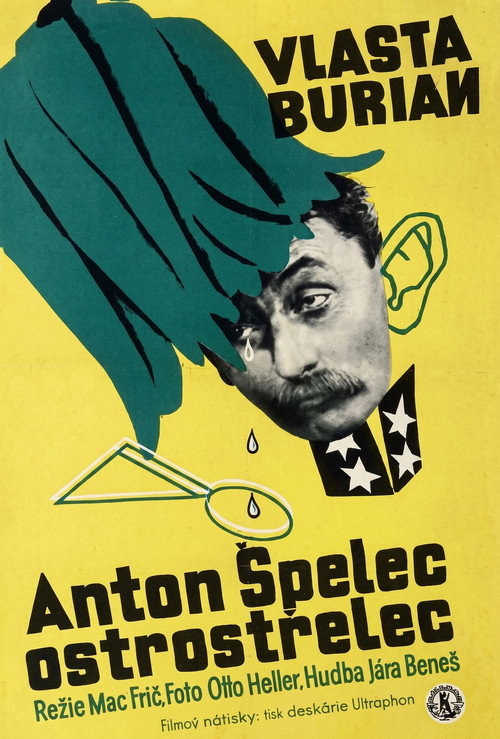
Anton Špelec, Sharp-Shooter
1932
No user ratings available yet
Representation score: 1.8 out of 10
Representation Score
Limited
1935
Director
Martin Frič
Runtime
91 minutes
Average Rating
No ratings yetNew Showbiz Analysis
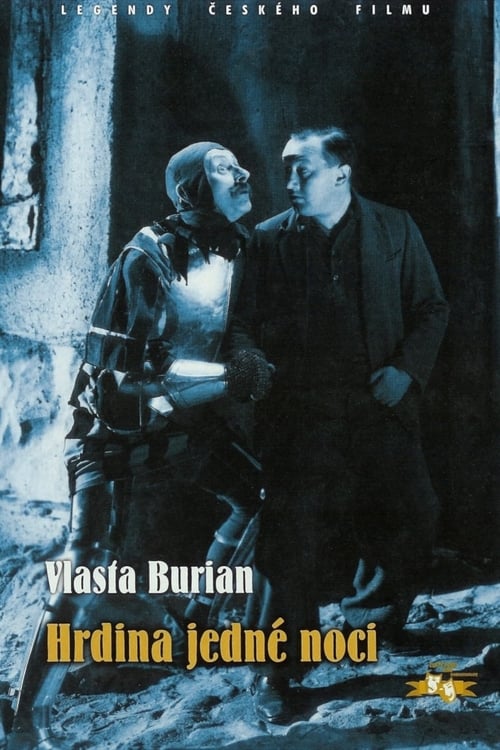
Hero of One Night is shaped by its 1930s historical context, focusing on situational comedy rather than identity-driven narratives. It reflects the demographic homogeneity typical of Czech cinema from that era. Although the film slightly deviates from the hyper-competent male lead stereotype through the portrayal of an inept and disorganized male character, it still adheres to traditional gender archetypes. The narrative centers on class distinctions and romantic clichés rather than systemic critiques. Overall, the film does not engage with multi-layered politics or diverse representation, functioning instead as a conventional comedy within established social hierarchies.
Category Breakdown
The film does not feature any explicit LGBTQ+ characters or identities that challenge traditional heterosexual norms. The plot revolves around conventional romantic conflicts between a male protagonist and several female characters.
Female characters play important roles but tend to follow traditional stereotypes, such as the victimized double or the aloof diva. The male lead is portrayed as inept rather than overly competent.
Given its 1935 Czech setting, the film features a homogeneous cast with no apparent multi-ethnic or non-white characters.
The storyline emphasizes social hierarchies and class conflict between workers and the upper class. It operates within traditional Western social structures and institutions.
The film does not depict any characters with visible or invisible disabilities, neurodivergence, or chronic illnesses.
Present on Screen
Limited or Absent
Official Synopsis
Country tailor Florian Svíčička neglects his work because of his interest in medieval history. When preparing an amateur performance at Zdislavice Castle, he gladly replaces the bailiff and plays the role of a knight. However, he ruins the performance and is shamefully banished. On his way home, he witnesses a horrific scene in the forest: two knights behead a young girl. It later turns out that it was a filming, and the girl Hana, a double for the famous diva Elvíra, spends the night with Florian at the castle because the filmmakers accidentally leave her. The master loses patience with Florian's excesses and Florian is fired from the tailoring shop. He sets off for Prague to find the girl he was with at the castle the night before. However, he does not know her name and accidentally comes to Elvíra's villa. The diva is not at home. Florian finds a love letter in the villa and thinks it is addressed to him. However, upon his return, Elvíra mercilessly throws Florian out...
1932
1938

1941
1955
1961
1952
1981
1933
No reviews yet. Be the first to share your thoughts on this movie!
Use the rating form above to leave a star rating and optional review.