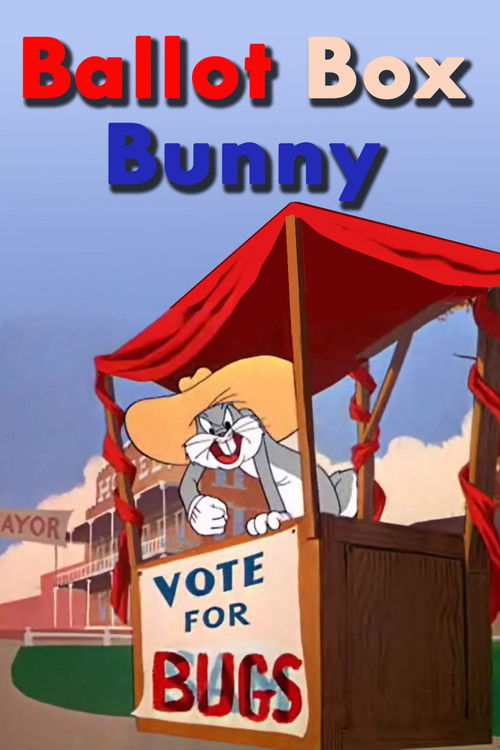
Ballot Box Bunny
1951
No user ratings available yet
Diversity score: 1.8 out of 10

1950
ApprovedDirector
Friz Freleng
Runtime
7 minutes
Average Rating
No ratings yetSynopsis
While attempting to evade a group of hunters, Bugs Bunny jumps into a rabbit hole and inadvertently tunnels into Sing Song prison, where the malevolent prison guard, Sam Schultz, assumes he's an inmate.
Overall Score
Minimal
Category Breakdown
LGBTQ+ Representation
The film lacks any depiction of non-cisnormative identities or same-sex intimacy. The narrative remains strictly heteronormative, offering no subtextual exploration of queer identity.
Gender Representation
Female college students provide a rare moment of female-centric agency in this Looney Tunes short. However, they function primarily as a synchronized musical ensemble rather than subverting traditional feminine tropes.
Racial & Ethnic Diversity
The short depicts a homogeneous collegiate environment with no significant evidence of racial blending. It adheres to the standard demographic norms of 1950s American animation.
Religious & Cultural Diversity
The film operates within a traditional Western framework, celebrating collegiate social structures. It lacks critiques of Western institutions or any introduction of anti-institutional themes.
Disability Representation
There are no visible or invisible disabilities portrayed within the narrative. All characters are depicted as able-bodied performers.
Strengths
Areas for Improvement
AI Analysis
Big House Bunny is a gag-driven musical short that prioritizes rhythmic comedy over social complexity. While it provides a platform for female characters to drive the musical sequences, it does so within a traditionalist framework. The narrative does not seek to disrupt conventional expectations or challenge established hierarchies. It functions as a product of its era, reinforcing mid-century social norms through its setting and character dynamics. Ultimately, the short lacks intersectional depth, presenting a largely undifferentiated social landscape that avoids systemic critique or cultural diversity.
1951
1948
1950
1942
1953
1960
1948
1955
1954
1955
1940
1955
No reviews yet. Be the first to share your thoughts on this movie!
Use the rating form above to leave a star rating and optional review.