
Hands Across the Rockies
1941
No user ratings available yet
Representation score: 1.7 out of 10
Representation Score
Minimal
1941
ApprovedDirector
Lambert Hillyer
Runtime
58 minutes
Average Rating
No ratings yetNew Showbiz Analysis
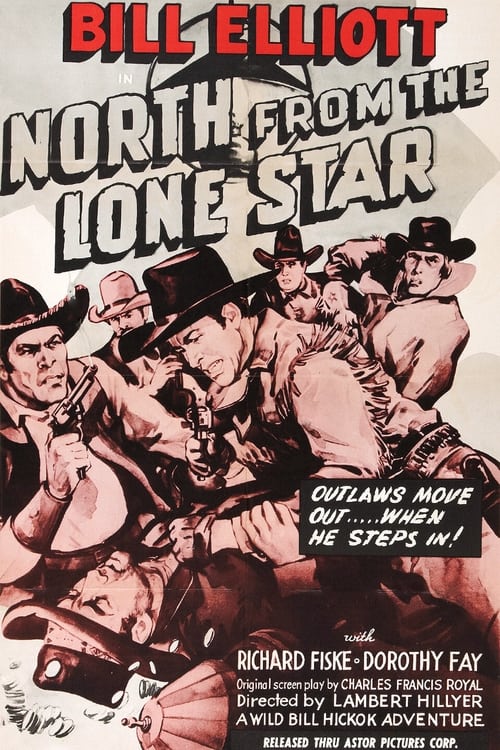
North from the Lone Star is a standard 1941 Western that operates within the rigid social hierarchies of its era. The narrative is driven by a singular male hero, Wild Bill Hickok, whose journey focuses on establishing order and justice in a frontier town. Representation is minimal, with the film relying on traditional gendered archetypes and a homogeneous cast. The power dynamics favor masculine leadership, while the cultural themes reinforce established Western values of property and stability. Ultimately, the film functions as a conventional genre piece. It lacks the intentionality to disrupt social expectations or offer meaningful perspectives on multiple aspects of diversity, remaining firmly rooted in the studio-era norms of the early 1940s.
Category Breakdown
The film lacks LGBTQ+ characters or narratives that question the assumption that everyone is straight or cisgender. It follows the conventional social norms of the early 1940s.
The plot centers on a male protagonist who drives the action through physical justice. Madge Wilson plays a supporting role as the sister of a business owner.
The narrative focuses on a homogeneous cast of Anglo-Saxon characters. There is no indication of diverse ethnic ensembles or actors from different backgrounds.
The story emphasizes individual heroism and the protection of property. It reinforces traditional Western values of capitalism and local law without challenging these structures.
There is no evidence of characters with visible or invisible disabilities. Disability is not used as a narrative device in this production.
Present on Screen
Limited or Absent
Official Synopsis
Wild Bill Hickock (William Elliott), aka The Peaceable Man, meters out justice in the tough town of Deadwood in this highly fictional western from Columbia. Unlike the historic character, Elliott's gunfighter survives his encounter with the South Dakota hellhole, where he arrives to aid beleaguered livery stable owner Clint Wilson (Richard Fiske) and his sister, Madge (Dorothy Fay), in their battle against self-appointed town czar "Flash" Kirby (Arthur Loft). But before he gets that far, there is a little matter of proving Kirby guilty of wrongdoing and to achieve that, Wild Bill earns the enmity of both the Wilsons.
1941
1940
1946
1939

1947
1958
1943

1959
No reviews yet. Be the first to share your thoughts on this movie!
Use the rating form above to leave a star rating and optional review.