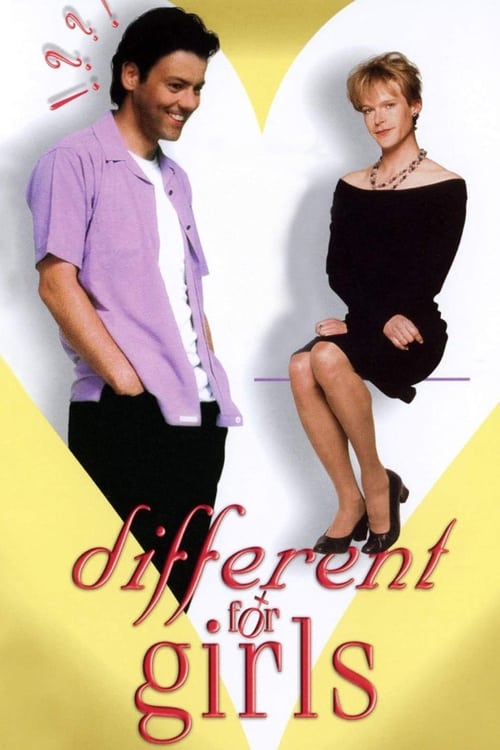
Different for Girls
1996
No user ratings available yet
Representation score: 5.6 out of 10

Representation Score
Fair
1994
PG-13Director
Adam Bernstein
Runtime
77 minutes
Average Rating
No ratings yetNew Showbiz Analysis
It's Pat serves as a unique cinematic experiment in identity fluidity. By avoiding anchoring the protagonist to a specific gender or race, the film disrupts traditional character development. The narrative's strength lies in its early engagement with non-binary existence. While the execution is rooted in slapstick comedy rather than theoretical depth, the structural decision to utilize indeterminate identities provides a foundational disruption of social hierarchies. Ultimately, the film functions as a postmodern attempt to deconstruct fixed identity markers within a mainstream comedic framework.
Category Breakdown
The film features a protagonist whose gender is ambiguous, serving as an early example of non-binary representation. This ambiguity is used primarily for situational humor rather than a deeper critique of societal norms.
Using multiple actors of various genders to play one character, the film challenges traditional gender roles and archetypes. This approach disrupts the audience’s reliance on binary visual cues.
The film uses color-blind casting, assigning different ethnicities to play the central character. This technique aims to separate identity from specific racial characteristics within the narrative.
The story mildly critiques corporate monotony and bureaucratic absurdity. It maintains a neutral stance on broader socio-political frameworks and does not deeply examine institutional structures.
There is no significant portrayal of visible or invisible disabilities within the film's character descriptions.
Present on Screen
Limited or Absent
Official Synopsis
Pat Riley, an obnoxious busybody of indeterminable sex, meets and falls in love with Chris, a sensitive, caring person also of indeterminable sex. Their relationship suffers because Pat's a lout, and cannot decide on a direction for their life. Meanwhile, Pat's neighbor Kyle falls further and further into obsession with Pat, fascinated by their indeterminate sexuality.
1996

1987

1994

2004
1998

2014
1996

1994
No reviews yet. Be the first to share your thoughts on this movie!
Use the rating form above to leave a star rating and optional review.