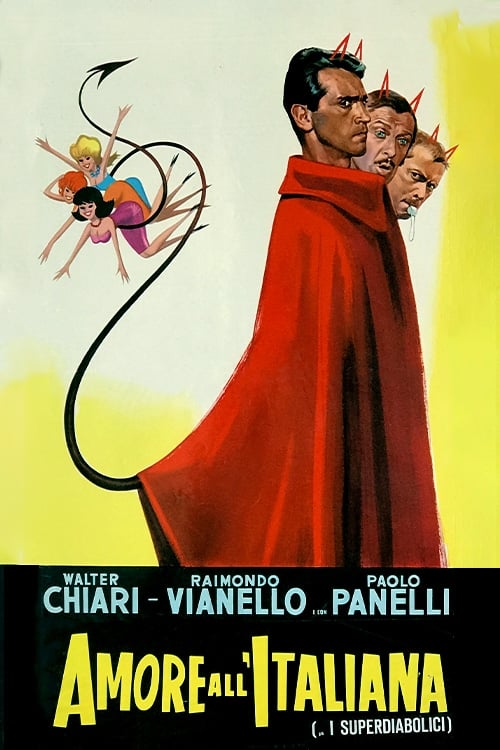
Love Italian Style
1966
No user ratings available yet
Representation score: 2.1 out of 10

Representation Score
Fair
1963
Not RatedDirector
Dino Risi
Runtime
123 minutes
Average Rating
No ratings yetNew Showbiz Analysis
Dino Risi’s satire is a sophisticated dissection of the Italian bourgeoisie during a period of rapid modernization. The film prioritizes sociological critique over demographic variety, focusing its energy on deconstructing the myths of the 1960s and the corruptive nature of capitalism. While the work succeeds in challenging institutionalized social pretension and traditional Western values, it remains tied to the era's social limitations. The narrative structure centers on traditional gender roles and a relatively homogeneous Italian social strata. Ultimately, the film is a study of moral relativism rather than inclusive representation. It uses comedy to expose the neuroses of a changing society without expanding its cast to include diverse racial, sexual, or physical identities.
Category Breakdown
The film focuses on the domestic anxieties of the Italian middle class. It does not depict any non-traditional gender identities or same-sex relationships.
The film explores the battle of the sexes through 1960s social etiquette. It highlights marital conflicts and portrays men as often inept, while adhering to traditional gender roles.
The setting reflects a homogeneous view of the Italian bourgeoisie during the economic boom. It does not feature diverse ethnic groups to challenge social norms.
Risi excels at satirizing consumerism and the moral decay of the sixties. The film effectively deconstructs traditional Western values and the pursuit of material status.
The concept of monstrosity is metaphorical, targeting psychological and moral failings. The film lacks meaningful representation or empowerment for individuals with visible or invisible disabilities.
Present on Screen
Limited or Absent
Official Synopsis
The myths of the sixties are satirized in 20 episodes.
1966

1980

1965
1977
1968
1966
1973
1970
No reviews yet. Be the first to share your thoughts on this movie!
Use the rating form above to leave a star rating and optional review.