
Totò Story
1968
No user ratings available yet
Representation score: 3.4 out of 10
Representation Score
Limited
1960
Director
Mario Mattoli
Runtime
99 minutes
Average Rating
No ratings yetNew Showbiz Analysis
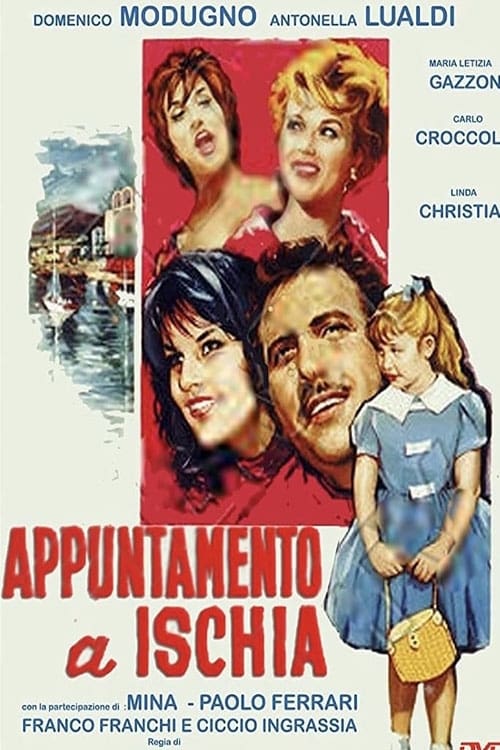
Appointment in Ischia is a typical product of its era, prioritizing traditional comedic structures over social commentary. The film reflects established social hierarchies in 1960s Italy rather than serving as a tool for disruption. The narrative structure reinforces mid-century norms regarding gender, sexuality, and cultural identity. It lacks the intention to challenge the status quo, opting instead for mainstream appeal and standard comedic clichés. Ultimately, the film presents a culturally uniform and straight-centered world. It avoids any significant engagement with disability, racial diversity, or progressive social subversion.
Category Breakdown
The film strictly follows the assumptions of 1960s Italian cinema, where everyone is assumed to be straight and cisgender. There is no depiction of non-traditional gender identities or same-sex relationships.
Women play central roles in the romantic plot but are confined to traditional roles. The film relies on mid-century clichés and does not give much importance to female empowerment or challenging patriarchal structures.
The production reflects the demographic uniformity of its time and place. The cast and character types suggest a focus on a culturally homogeneous Italian population in Ischia.
The narrative celebrates traditional Western social and romantic ideals. It lacks criticism of religion or the nuclear family, presenting a stable and conventional social reality.
There is no evidence of characters with visible or invisible disabilities. The film does not address neurodivergence or physical disability as a theme.
Present on Screen
Limited or Absent
Official Synopsis
Famous singer Mimmo is a widower with a daughter, Letizia, to whom will give a mother. But the girl does not accept the current girlfriend of her father, growing fond of a young man, who wants as mother. The child creates many situations, such as coming to Ischia for treatment with mud, so that the two would meet and fall in love.
1968

1980

1960

1952

1966
1964

1964

1967
No reviews yet. Be the first to share your thoughts on this movie!
Use the rating form above to leave a star rating and optional review.